
If you’ve ever wanted to bake your own tangy, crusty bread but felt overwhelmed by the process, you’re in the right place. This Overnight Sourdough Bread Recipe is my go-to for making homemade sourdough that’s hands-off, forgiving, and incredibly delicious. The slow rise allows all those complex flavors to develop, and you’ll love how simple it is to pull together the dough before you go to bed—then wake up to a kitchen filled with the smell of fresh bread. Trust me, once you try this, you’ll be hooked!
Why You’ll Love This Recipe
- Effortless Overnight Prep: Mix it up at night, and your bread practically makes itself while you sleep.
- Perfect Texture Every Time: You’ll get that irresistible crusty exterior with a soft, airy crumb inside.
- Great for Busy Schedules: No fancy equipment or constant monitoring needed—just simple, doable steps.
- Versatile and Reliable: Adjust the flour types or fermentation times to suit your taste and schedule.

Ingredients You’ll Need
These ingredients are straightforward but key to getting that authentic sourdough flavor and perfect crumb. I always keep quality all-purpose flour on hand—it’s forgiving and feels just right for this recipe. Plus, a lively starter is all you need beyond the basics.

- Sourdough starter: Make sure your starter is active and bubbly; this is what gives your bread its signature tang and lift.
- All-purpose flour: I recommend standard all-purpose for a perfect balance of texture, but you can experiment with whole wheat or rye additions.
- Salt: Enhances flavor and strengthens the dough structure.
- Water: Lukewarm works best to help activate your starter and hydrate the flour.
Variations
I love customizing this Overnight Sourdough Bread Recipe depending on the season or what I have on hand. It’s so forgiving that a few tweaks go a long way toward reinventing it without stress.
- Whole Wheat or Rye Flour: I add up to 25% whole wheat for more depth and a heartier flavor—my family goes crazy for it on cool mornings.
- Seeds and Nuts: Incorporate toasted sunflower seeds or walnuts into the dough for a crunchy surprise inside.
- Herb Infusion: Some chopped rosemary or thyme mixed in before the final fold adds a lovely fragrant note.
- Gluten-Free Alternative: While this exact recipe relies on gluten, you can experiment with gluten-free starters and flours, but baking times and textures will vary.
How to Make Overnight Sourdough Bread Recipe
Step 1: Mix It Up Before Bedtime
I start by combining 520 grams of all-purpose flour, 12 grams of salt, and 90 grams of my bubbly sourdough starter in a large bowl. Then I pour in about 1 7/8 cups of lukewarm water and get in there with my hands to mix. Don’t worry if it feels wet and shaggy—that’s exactly how it should look! This high hydration helps develop a beautiful open crumb. Cover it with a towel and let it rest for 15 minutes.
Step 2: The Magic of Folding
After that first rest, it’s folding time! Wet your hands slightly to keep the dough from sticking, then grab one corner and fold it over the rest of the dough. Rotate the bowl and repeat about 15 times until the dough resists stretching. This strengthens the gluten network, giving you great structure. Cover again for another 15 minutes, then fold once more before letting the dough rise overnight—this slow ferment brings those deep sourdough flavors alive.
Step 3: Morning Fold and Shape
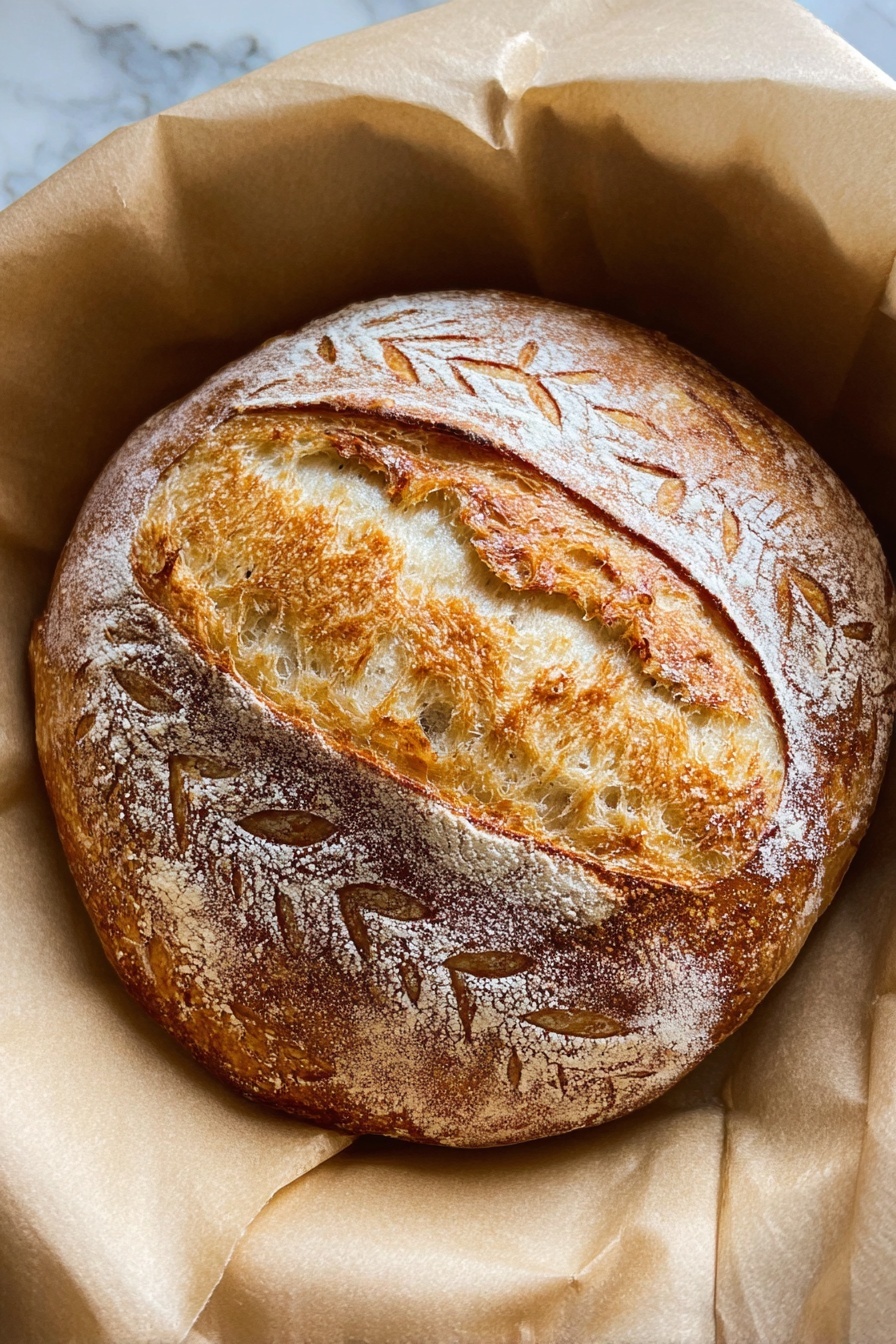
Come morning, your dough should be puffed up with lovely air bubbles on top—that’s a great sign! I like to prep a bowl lined with parchment paper and a dusting of flour to hold the dough. Then with wet hands, gently loosen the dough from the bowl edges, fold it over onto itself three times, rotating each time, and tuck the ends underneath. Carefully transfer the dough to the lined bowl, sprinkle a little flour on top, and pop it in the fridge for about 5 hours. This cold ferment helps develop a crispier crust.
Step 4: Bake with High Heat and Steam
Before baking, preheat your oven to a blazing 500°F (I use convection if you have it) with a Dutch oven inside—it acts like a mini steam oven, which is essential for crusty bread. Take your cold dough out, score the top with a sharp knife (I usually do a long slash down the middle plus a few on the sides), and carefully transfer it along with the parchment paper to the hot Dutch oven. Bake covered for 25 minutes, then remove the lid, turn the heat down to 450°F, and bake another 12 to 14 minutes until you see a deep golden crust.
Once it’s out, I let it cool on a wire rack for at least an hour. I know it’s tempting to slice right away, but this step helps finish setting the crumb texture. Patience here pays off big time.
Pro Tips for Making Overnight Sourdough Bread Recipe
- Use Unfed Starter: I prefer using unfed starter straight from the fridge to get that tangy, robust sourdough flavor that everyone notices.
- Wet Your Hands for Folding: It saves you from dreading sticky hands and keeps your folds neat and easy.
- Preheat with Dutch Oven Inside: This traps steam beautifully, giving your bread that golden, crackly crust everyone raves about.
- Don’t Rush the Cool Down: Waiting the full hour before slicing ensures the crumb sets perfectly without becoming gummy.
How to Serve Overnight Sourdough Bread Recipe

Garnishes
I often sprinkle the dough top with a little extra flour before baking—it adds a rustic look that I personally adore. When serving, a smear of good butter or drizzle of olive oil with cracked sea salt makes a simple but heavenly combo that brings out all the flavors.
Side Dishes
This bread pairs wonderfully with creamy tomato soup, a vibrant salad, or even a sharp cheese board. My family loves dunking slices into warm stews, making it a staple comfort food in our house.
Creative Ways to Present
For special occasions, I’ve shaped this dough into smaller round boules and added scoring patterns that look like leaves or wheat stalks—it’s such a beautiful touch. Another favorite trick is serving thick slices alongside a board of homemade jams and cured meats for a rustic-restaurant vibe at home.
Make Ahead and Storage
Storing Leftovers
My go-to is wrapping leftover bread loosely in a kitchen towel and storing it in a bread box or paper bag at room temperature. This keeps the crust crisp without trapping too much moisture. I’ve found plastic bags tend to soften the crust too much.
Freezing
This bread freezes beautifully sliced or whole. I slice and wrap pieces tightly in foil or freezer bags so I can grab just what I need. When thawed, the texture is almost just as good as fresh.
Reheating
To revive the crust, I pop slices directly on my toaster oven rack or heat the whole loaf in a 350°F oven for about 10 minutes. The crust crisps right back up, and the crumb warms through without drying out.
FAQs
-
Can I use cold starter for this Overnight Sourdough Bread Recipe?
Absolutely! I actually prefer using cold, unfed starter straight from the fridge. It slows down fermentation a bit, which develops a deeper sour flavor. Just make sure your starter is bubbly and healthy; if it looks sluggish, feeding it a cycle or two beforehand can help.
-
What if my dough feels too wet and sticky to handle?
Don’t worry—sourdough doughs are often quite wet. Wetting your hands before folding helps prevent sticking, and the folding process itself will strengthen the dough gradually. If it feels excessively sticky, make sure you’re measuring flour accurately and use a kitchen scale, which makes a big difference!
-
Can I bake this bread without a Dutch oven?
You can, but the Dutch oven creates steam essential for that crisp crust and good oven spring. If you don’t have one, you can place a shallow pan of hot water on the oven bottom or mist the oven walls with water during the first 15 minutes of baking to replicate steam.
-
How do I know when the bread is done?
Look for a deep golden brown crust, and when tapped on the bottom, the loaf should sound hollow. Internal temperature measuring around 205°F with an instant-read thermometer is another reliable way to check.
Final Thoughts
This Overnight Sourdough Bread Recipe has become a beloved ritual for me and my family. There’s something truly comforting about waking to fresh bread ready to enjoy without stress or complicated steps. I hope you find as much joy in baking it as I do sharing it. Give it a try, trust the process, and watch how this simple dough transforms into your new favorite homemade loaf.
Print
Overnight Sourdough Bread Recipe
- Prep Time: 40 minutes
- Cook Time: 40 minutes
- Total Time: 18 hours 20 minutes
- Yield: 12 slices
- Category: Bread
- Method: Baking
- Cuisine: American
Description
This Easy Overnight Sourdough Bread recipe guides you through a simple, hands-on process to create a flavorful and crusty loaf with minimal active effort. Using a slow fermentation method and basic ingredients, this bread features an open crumb with delightful air pockets and a rich sourdough tang. Ideal for beginners and sourdough enthusiasts alike, the recipe employs a Dutch oven bake to achieve a perfectly crisp crust and soft interior.
Ingredients
Dry Ingredients
- 520 grams all-purpose flour
- 12 grams salt
Wet Ingredients
- 90 grams sourdough starter
- 1 7/8 cups water (approximately 440 ml)
Instructions
- Mix Ingredients: The night before baking, combine 520 grams of all-purpose flour, 12 grams of salt, and 90 grams of active sourdough starter in a large bowl. Pour in 1 7/8 cups of water and use your hands to mix until all ingredients are incorporated. The dough will be wet and shaggy, which is expected.
- First Rest and Fold: Cover the bowl with a towel and allow the dough to rest for 15 minutes. After resting, perform a series of folds by grabbing a corner of the dough and folding it over the rest, rotating the bowl and repeating about 15 times until the dough resists stretching. Wet your hands slightly to prevent sticking.
- Second Rest and Fold: Cover the dough again to rest for another 15 minutes. Repeat the folding process once more, then cover again and leave the dough to rise overnight at room temperature.
- Morning Fold and Shape: In the morning, the dough should have risen with visible air bubbles. Prepare a mixing bowl lined with parchment paper and dust it with flour to hold the dough. Wet your hands and gently loosen the dough from the original bowl edges. Lift the center and tuck the ends underneath, rotating the bowl and repeating the fold two more times. Transfer the dough carefully to the prepared bowl, tuck under ends, sprinkle flour on top, and cover. Place the dough in the refrigerator for 5 hours.
- Preheat Oven and Dutch Oven: About 30 minutes before baking, preheat your oven to 500°F (260°C), preferably using the convection setting. Place your Dutch oven with its lid inside the oven to heat up while preheating.
- Score and Transfer Dough: Remove the dough from the fridge. Using a sharp knife, score the dough with a long slash down the center and several smaller slashes on the sides to control expansion. Transfer the dough on the parchment paper into the preheated Dutch oven.
- Bake Covered: Bake the bread with the lid on for 25 minutes at 500°F. This traps steam to help form a crisp crust and promote oven spring.
- Bake Uncovered: Remove the Dutch oven lid, reduce the temperature to 450°F (232°C), and continue baking for an additional 12 to 14 minutes until the crust is deeply browned and crisp.
- Cool the Bread: Remove the bread from the oven and allow it to cool enough to handle. Then place it on a wire rack. Ideally, wait at least 1 hour before slicing to allow the crumb to set properly.
Notes
- You can substitute other types of flour, but keeping a high percentage of all-purpose flour will maintain the bread’s texture.
- Baking times can be adjusted according to your preference for crust color; longer covered baking results in lighter crusts, while shorter covered bake followed by uncovered bake creates darker crusts.
- Using unfed sourdough starter contributes a stronger sour flavor; feeding your starter 8-12 hours prior is optional depending on desired tang.
Nutrition
- Serving Size: 1 slice (approx. 75g)
- Calories: 150
- Sugar: 0.2 g
- Sodium: 300 mg
- Fat: 0.8 g
- Saturated Fat: 0.1 g
- Unsaturated Fat: 0.5 g
- Trans Fat: 0 g
- Carbohydrates: 32 g
- Fiber: 1.5 g
- Protein: 5 g
- Cholesterol: 0 mg