

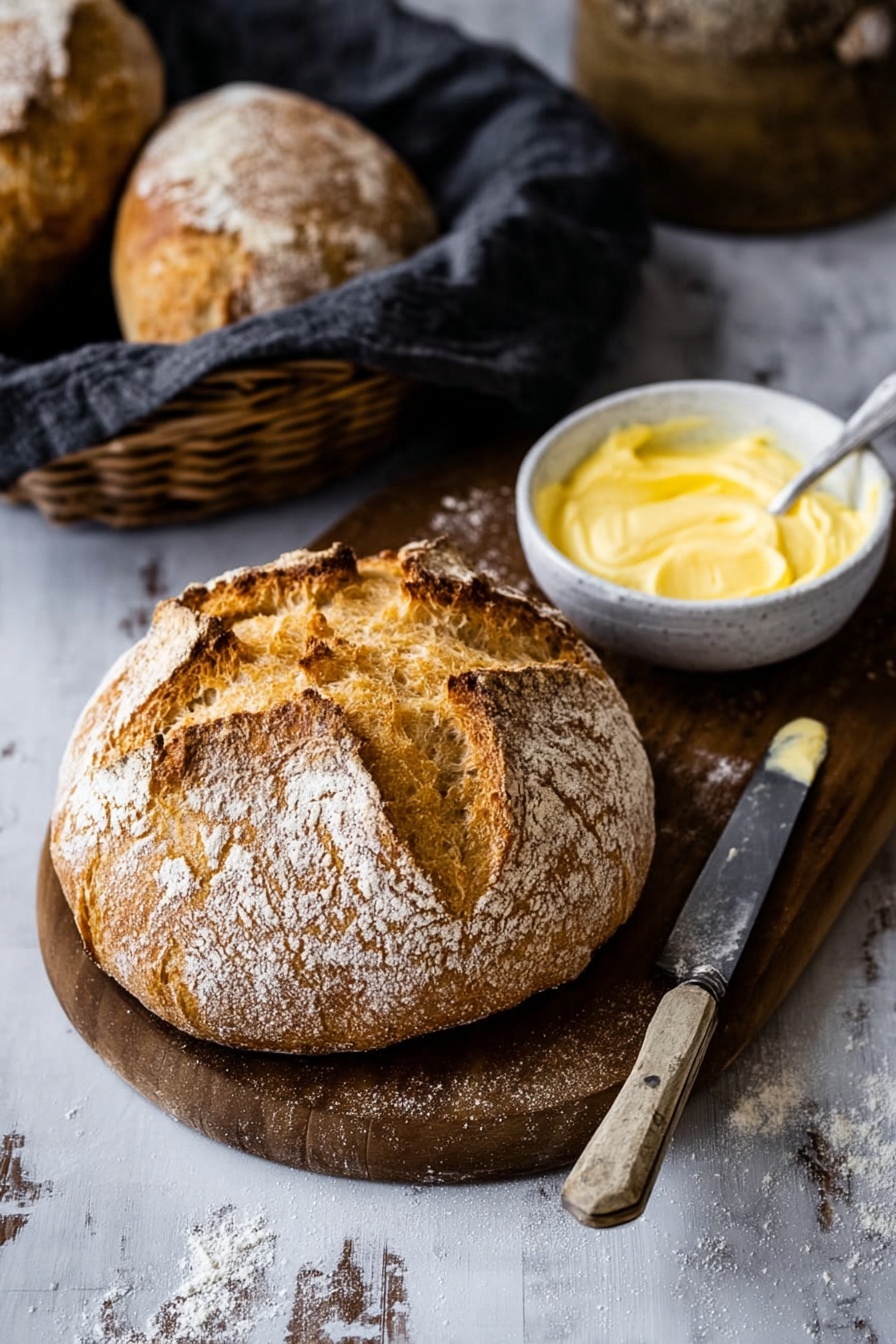
If you’re craving a quick, no-fuss, and seriously comforting bread, this Irish Soda Bread Recipe is exactly what you need. I absolutely love how this bread turns out with its crisp crust and tender crumb, and it comes together in a flash without any yeast or rising time. When I first tried this recipe, I was amazed at how simple ingredients created such a satisfying, rustic loaf. Stick around because I’m sharing all my tips and tricks to help you nail it perfectly every time!
Why You’ll Love This Recipe
- Super Simple Ingredients: No fancy stuff here—just pantry basics that you probably already have on hand.
- No Yeast, No Waiting: This soda bread relies on baking soda and buttermilk, so you can bake it up fast without any rising time.
- Rustic, Hearty Flavor: The chewy crust and tender crumb make it perfect for breakfast or alongside hearty stews.
- Perfect for Any Occasion: Whether it’s St. Patrick’s Day or a cozy weekend, this bread fits right in.

Ingredients You’ll Need
This Irish Soda Bread Recipe keeps it straightforward with simple ingredients that work incredibly well together. When shopping, pick unbleached flour for the best texture and make sure your buttermilk is fresh and tangy—it really makes a difference!

- Unbleached all-purpose flour: I like unbleached because it has a bit more texture and flavor than bleached.
- Kosher salt: It seasons the bread without being too salty—fine salt can work, but kosher salt is easier to measure by hand.
- Baking soda: This is your leavening agent that reacts with the buttermilk’s acidity to help the bread rise.
- Buttermilk: The star ingredient that adds moisture and that unique tang; you can substitute with milk plus lemon juice if needed, but real buttermilk is best.
Variations
I’ve played around a lot with this Irish Soda Bread Recipe to make it my own and I encourage you to do the same! Adding your favorite extras or adjusting the mix is a fun way to personalize it.
- Raisin or Currants: I sometimes fold in a handful of raisins for a hint of sweetness—my family goes crazy for this little twist!
- Herbs and Seeds: Chopped fresh rosemary or thyme, or a sprinkle of caraway seeds, can add a lovely savory dimension that’s perfect alongside soups.
- Gluten-Free Version: You can substitute with a gluten-free flour blend, but be sure to check baking soda amounts and adjust liquid since the texture changes quite a bit.
- Dairy-Free Option: Swap buttermilk for coconut or almond milk mixed with lemon juice for a tangy non-dairy alternative.
How to Make Irish Soda Bread Recipe
Step 1: Mix Your Dry Ingredients
Start by preheating your oven to 450°F (230°C) and lining a baking sheet with parchment paper. In a large bowl, whisk together the unbleached flour, kosher salt, and baking soda until fully combined. This even distribution is key so your bread rises properly.
Step 2: Add the Buttermilk and Stir Gently
Make a well in the center of your dry ingredients and pour in the buttermilk. Using a wooden spoon, gently stir starting from the center and work outward. The dough will be rough and shaggy—that’s exactly what you want. Don’t overmix or knead yet!
Step 3: Shape Your Loaf with Care
Lightly flour your work surface and turn out the dough. Using your hands, knead it just 3-4 times until it holds together and looks smoother. You don’t want to overwork it or the bread will turn tough. Then, shape it into a round loaf with the palms of your hands.
Step 4: Score and Bake
Place your loaf on the parchment-lined baking sheet. Dust the top lightly with flour and use a sharp knife to cut a deep X across the top. This traditional cut helps the heat get inside and gives that classic look.
Pop it into the oven and bake at 450°F for 15 minutes. Then lower the temperature to 400°F, turn the pan around for even baking, and bake for another 25-30 minutes or until deep golden brown. Let it cool at least 20 minutes before slicing—though I confess, I sometimes sneak a warm slice right away with butter!
Pro Tips for Making Irish Soda Bread Recipe
- Use Fresh Baking Soda: Old baking soda loses potency and your bread won’t rise properly—I learned this the hard way once!
- Don’t Over-Knead: Just a few folds to bring it together prevents a dense loaf; less is definitely more here.
- Cut a Deep X: This helps the bread expand and cooks it evenly—it’s both functional and iconic.
- Bake on Parchment: I avoid sticking and cleanup headaches by always using parchment paper—it also helps with even browning.
How to Serve Irish Soda Bread Recipe

Garnishes
I love serving this Irish Soda Bread with a generous pat of Kerrygold salted butter—there’s something so heavenly about butter melting into the warm crumb. Sometimes, I sprinkle a little sea salt or brush it with a bit of honey for an extra touch of sweetness. If you’re feeling fancy, a smear of creamy Irish cheddar or a smear of jam takes it to another level.
Side Dishes
This bread pairs beautifully with slow-cooked Irish stew, hearty soups like potato leek, or even a simple bowl of butter-braised cabbage. I also like it alongside scrambled eggs or sautéed greens for a wholesome meal that feels totally homey.
Creative Ways to Present
For special occasions, I’ve turned this bread into individual mini loaves by dividing the dough before baking—perfect for handing out at a dinner party. Alternatively, serving it sliced in thick rounds alongside a cheese platter gives it that cozy, rustic vibe every guest appreciates.
Make Ahead and Storage
Storing Leftovers
I wrap leftover Irish Soda Bread tightly in a clean kitchen towel or beeswax wrap and keep it at room temperature for up to two days. It stays surprisingly fresh, though it’s best enjoyed within a day for that optimal crusty-tender balance.
Freezing
If I want to save some for later, I slice the bread first, then freeze the slices in an airtight bag. This way, you can toast just what you need without thawing the entire loaf. It freezes beautifully and doesn’t lose any of its lovely texture.
Reheating
To bring stale or frozen slices back to life, I pop them in a toaster or warm them in a 350°F oven wrapped in foil for about 10 minutes. For a fresh-out-of-the-oven feel, a little butter spread warm on reheated bread is pure bliss.
FAQs
-
Can I make this Irish Soda Bread Recipe without buttermilk?
Yes! If you don’t have buttermilk, you can create a simple substitute by adding 1 tablespoon of lemon juice or white vinegar to 1 cup of milk. Let it sit for 5–10 minutes until it curdles slightly, then use it in place of buttermilk. It’s not quite the same but works well enough to help the bread rise and gives that slight tang.
-
Why does my Irish Soda Bread turn out dense?
A dense loaf usually means the dough was over-kneaded or overmixed. Since soda bread doesn’t use yeast, you want a light touch. Mix just until everything comes together, then knead only a few times to shape the dough. Also, make sure your baking soda is fresh and you use the right amount of buttermilk—it’s all about balance.
-
Can I add sugar or sweeteners to the Irish Soda Bread Recipe?
Traditional Irish Soda Bread is not sweet, but you can add a tablespoon or two of sugar or honey if you prefer a subtly sweet bread. Alternatively, add dried fruit like raisins for natural sweetness. Just keep in mind that too much sugar can affect how the bread rises.
-
How do I know when the bread is fully baked?
The bread should be a deep golden brown on the outside and sound hollow when tapped on the bottom. If you want to be sure, you can insert a skewer into the center—if it comes out clean or with just a few crumbs, it’s done. Let it cool partially before slicing for the best texture.
Final Thoughts
This Irish Soda Bread Recipe is one of my go-to comfort foods—a little taste of tradition that’s both quick and incredibly satisfying. I hope you’ll give it a try and find the same joy I have in making it. It’s wonderful with just some good butter, and even better when shared with family or friends. So, warm up your oven, grab a mixing bowl, and make yourself a loaf that feels like a hug from the inside out!
Print
Irish Soda Bread Recipe
- Prep Time: 12 minutes
- Cook Time: 45 minutes
- Total Time: 57 minutes
- Yield: 1 loaf (about 8 servings)
- Category: Bread
- Method: Baking
- Cuisine: Irish
- Diet: Vegetarian
Description
Traditional Irish Soda Bread is a classic, rustic loaf made without yeast, relying on baking soda and buttermilk for its rise. This quick bread has a dense, tender crumb with a golden crust and pairs perfectly with butter or jam, making it a staple in Irish households.
Ingredients
Dry Ingredients
- 3 1/2 cups unbleached all-purpose flour (420 g)
- 3/4 teaspoon kosher salt (3 g)
- 3/4 teaspoon baking soda
Wet Ingredients
- 1 1/2 cups buttermilk (337 g)
Instructions
- Preheat Oven and Prepare Baking Sheet: Preheat your oven to 450°F (232°C). Line a baking sheet with parchment paper and set aside to ensure the bread does not stick and for easy cleanup.
- Mix Dry Ingredients: In a large mixing bowl, combine the flour, kosher salt, and baking soda. Whisk these together thoroughly to evenly distribute the leavening agents and salt throughout the flour.
- Add Buttermilk and Form Dough: Make a well in the center of the dry ingredients using a wooden spoon. Pour the buttermilk into the well. Using the wooden spoon, gently stir the ingredients together starting from the center and working outward. The dough will be shaggy and sticky, which is expected for this bread.
- Knead the Dough Lightly: Lightly flour a clean work surface. Pour the dough onto it and gently knead about 4 times, just until it comes together and forms a slightly smoother surface. Avoid over-kneading to maintain the bread’s tender texture.
- Shape and Score the Loaf: Using the palms of your hands, shape the dough into a round loaf. Transfer it to the prepared baking sheet. Lightly sprinkle the top with flour, then use a sharp chef’s knife to score a large ‘X’ on top. This helps the bread expand evenly as it bakes.
- Bake the Bread: Place the bread immediately into the preheated oven and bake at 450°F for 15 minutes. Then, reduce the oven temperature to 400°F (204°C), rotate the baking sheet 180 degrees for even baking, and continue baking for another 25 to 30 minutes until the loaf is deeply golden brown and sounds hollow when tapped on the bottom.
- Cool and Serve: Remove the bread from the oven and let it cool on a wire rack for at least 20 minutes. Serve warm, ideally with Kerrygold Salted Butter or your favorite spread.
Notes
- Do not over-knead the dough; it should remain slightly shaggy for the best texture.
- Make sure to score the top deeply to allow proper expansion and even baking.
- Use unbleached all-purpose flour for best flavor and texture.
- Serve warm with butter or jam for a traditional experience.
- Store any leftover bread wrapped in a clean kitchen towel to keep the crust crisp.
Nutrition
- Serving Size: 1 slice (1/8th of loaf, approx. 65 g)
- Calories: 165
- Sugar: 1 g
- Sodium: 210 mg
- Fat: 1.5 g
- Saturated Fat: 0.3 g
- Unsaturated Fat: 1.2 g
- Trans Fat: 0 g
- Carbohydrates: 34 g
- Fiber: 1.5 g
- Protein: 5 g
- Cholesterol: 5 mg