If you’re on the hunt for the coziest, most comforting side dish to accompany your holiday feast or Sunday dinner, I have just the thing for you: my Homemade Stuffing Recipe with Sage and Herbs Recipe. This one is a total game-changer — packed with fragrant fresh herbs like sage and thyme, buttery sautéed veggies, and that perfectly toasted bread base that soaks up all those delicious flavors. Trust me, making stuffing from scratch is easier than you think, and the results? Absolutely fan-freaking-tastic. Stick around, and I’ll walk you through every detail so your stuffing turns out just right!
Why You’ll Love This Recipe
- Made with fresh herbs: The combination of sage, thyme, and parsley really elevates the flavor, giving you that classic homemade stuffing taste.
- Perfect texture: Toasting the bread before mixing keeps the stuffing from turning mushy while still staying moist and tender.
- Easy to make ahead: You can prep it a day early and bake it fresh right before serving, which makes entertaining a breeze.
- Family favorite: I discovered this recipe after struggling with store-bought mixes, and now my family always requests it for holidays.

Ingredients You’ll Need
I love how these ingredients all balance each other: the aromatic herbs bring freshness, the buttery veggies add depth, and the hearty bread delivers that classic stuffing comfort. When buying the bread, try to find a good-quality Texas toast or French bread — that’s key for the best texture.

- Texas toast or French bread: Using a sturdy bread that can handle soaking up liquid without disintegrating is crucial.
- Unsalted butter: I prefer unsalted so I can control the seasoning better.
- White or yellow onion: Adds just the right amount of sweetness and savoriness after sautéing.
- Celery stalks: Classic stuffing veggie — gives a nice crunch and fresh bite.
- Kosher salt: Enhances all the other flavors without being overpowering.
- Freshly cracked black pepper: For a subtle kick and peppery depth.
- Garlic: Minced fresh garlic brings a lovely earthiness that elevates the whole dish.
- Fresh sage: This is the star herb of the recipe, its warm flavor brings nostalgia to every bite.
- Fresh parsley: Adds a pop of color and brightness.
- Eggs: Bind everything together to help the stuffing hold its shape.
- Chicken broth: The moistening agent that adds flavor and keeps the stuffing from drying out.
- Fresh thyme: Adds a subtle herbal note that rounds out the herb blend perfectly.
Variations
I encourage you to let this stuffing be your blank canvas. Over the years, I’ve tweaked this recipe by adding my own spin depending on the occasion, and it always turns out delicious. Feel free to experiment — you’ll find what suits your family best.
- Add sausage: Sometimes I brown some breakfast sausage and mix it in for a heartier, meatier stuffing — my family goes crazy for this version!
- Go vegetarian: Swap the chicken broth for vegetable broth to make it fully vegetarian without sacrificing flavor.
- Use cornbread instead of white bread: For a Southern twist that adds a slightly sweet, crumbly texture, which is delicious alongside this herb mix.
- Include dried cranberries or chopped apples: For a festive, sweet-tart pop that suits holiday meals.
How to Make Homemade Stuffing Recipe with Sage and Herbs Recipe
Step 1: Toast Your Bread Cubes to Crispy Perfection
This is a step I’ve learned not to skip — it makes all the difference! Preheat your oven to 300°F and spread out your cubed bread evenly on a baking sheet. Bake it for 40 to 60 minutes, stirring every 8 to 10 minutes, until the cubes are thoroughly dried and crispy but not browned. This drying process helps your bread soak up just the right amount of liquid later without turning soggy. Pro tip: you can absolutely do this step the day before to save time.
Step 2: Sauté the Veggies and Aromatics
Turn your oven up to 350°F now. In a large skillet, melt the butter over medium heat, then add diced onions, celery, and minced garlic. Cook for about 4 minutes until everything is softened and fragrant. This step infuses warmth and depth into the dish, and those softened veggies give your stuffing texture and flavor.
Step 3: Combine Bread, Veggies, and Herbs
Pour that savory vegetable and butter mixture over your toasted bread cubes, then toss to coat evenly. Sprinkle in salt, pepper, fresh sage, and parsley, and toss again to combine all those lovely flavors uniformly. This is where the stuffing really starts to come to life — the herbs add those classic holiday vibes you can’t get from a box mix.
Step 4: Add Eggs and Broth to Bind
Whisk your eggs in a small bowl until smooth and pour those over the bread mixture. Next, add chicken broth gradually, stirring gently to coat all the bread cubes. If you prefer moister stuffing like I do, feel free to add up to half a cup more broth. Just be careful not to stir too hard, or the bread cubes will start to fall apart.
Step 5: Bake and Serve
Transfer your stuffing mix to a greased 9×13 casserole dish and cover it tightly with foil. If you’re not baking it immediately, you can refrigerate it for up to 24 hours — I love this for prepping ahead on busy days. When ready, bake at 350°F for 30 minutes covered, then uncover and bake an additional 10 to 15 minutes until the top is beautifully golden brown. Serve while warm and watch everyone go back for seconds!
Pro Tips for Making Homemade Stuffing Recipe with Sage and Herbs Recipe
- Use Day-Old Bread: Slightly stale bread holds up better when soaking up liquids and won’t get mushy.
- Don’t Over-Stir: Gently fold the liquid ingredients in so you keep those bread cubes intact for a delightful texture contrast.
- Add Extra Broth for Moisture: I often add a little more chicken broth than called for because I love a moister stuffing, especially with savory herbs.
- Cover While Baking: Keeping the dish covered helps the stuffing steam and stay moist, uncover only at the end to crisp the top.
How to Serve Homemade Stuffing Recipe with Sage and Herbs Recipe

Garnishes
I love to top this stuffing with a sprinkle of fresh chopped parsley for color and a little extra brightness right before serving. Sometimes a drizzle of melted butter warmed up with a few sage leaves adds a lovely finishing touch — it makes it feel extra special and restaurant-worthy.
Side Dishes
This herb-packed stuffing pairs beautifully with classic roasted turkey, honey-glazed ham, or even a simple roast chicken. I also like serving it alongside green bean almondine, roasted Brussels sprouts, or a fresh cranberry sauce to balance the richness.
Creative Ways to Present
For holiday dinners, I sometimes serve this stuffing in individual ramekins topped with a crispy sage leaf — guests appreciate the personal touch. Another fun idea is hollowing out a small pumpkin or squash and baking the stuffing inside for a festive and eye-catching presentation.
Make Ahead and Storage
Storing Leftovers
Leftover stuffing? No problem! I store mine in an airtight container in the fridge, and it stays fresh for up to 5 days. Just be sure to cool it completely before sealing to avoid sogginess.
Freezing
I’ve frozen this stuffing successfully several times. Simply transfer it to a freezer-safe container after baking, and it will keep for about 3 months. When you’re ready, thaw it overnight in the fridge before reheating.
Reheating
To bring leftover stuffing back to life, reheat it covered in the oven at 350°F for about 20 minutes. If it looks a bit dry, sprinkle a tablespoon or two of chicken broth over the top before warming — that always refreshes the moisture beautifully.
FAQs
-
Can I use store-bought pre-cubed bread for this stuffing?
Absolutely! Many grocery stores sell pre-cubed and toasted bread meant specifically for stuffing, usually in the bakery section. I’ve used it myself to save time and it works well — just measure about 8 heaping cups of cubes for this recipe.
-
Is it possible to make this stuffing vegan?
Yes! To make this vegan, swap the butter for a plant-based alternative, use vegetable broth instead of chicken broth, and replace the eggs with a flax egg or another vegan binder. The flavor will still be wonderful with all those fresh herbs.
-
Can I prepare this stuffing completely ahead of time and freeze it before baking?
You can prepare the stuffing and freeze it either before or after baking. If freezing before baking, assemble the dish, cover tightly, and freeze for up to 3 months. Thaw in the fridge overnight and bake as usual. If freezing after baking, cool completely and freeze in an airtight container.
-
What bread types work best for this Homemade Stuffing Recipe with Sage and Herbs Recipe?
I recommend Texas toast or French bread because they have a sturdy crumb that soaks up broth well without turning into mush. Avoid very soft sandwich bread that falls apart easily when moist.
Final Thoughts
I absolutely love how this Homemade Stuffing Recipe with Sage and Herbs Recipe turns out every time — it’s become my go-to for holidays and family dinners alike. I remember the first time I nailed it; seeing everyone pile their plates high and ask for seconds was so rewarding! If you want a stuffing that’s packed with fresh herb flavor, buttery goodness, and the perfect balance of moist and crispy, this recipe will not let you down. Give it a try—you’ll be so glad you did!
Print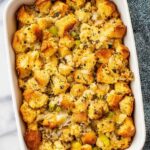
Homemade Stuffing Recipe with Sage and Herbs Recipe
- Prep Time: 1 hour 15 minutes
- Cook Time: 40 minutes
- Total Time: 1 hour 55 minutes
- Yield: 8 servings
- Category: Side Dish
- Method: Baking
- Cuisine: American
Description
This classic homemade stuffing recipe combines toasted Texas toast bread cubes with sautéed onions, celery, garlic, fresh herbs, and a savory mixture of eggs and chicken broth for the perfect Thanksgiving side dish. Baked until golden and crispy on top, this flavorful stuffing is moist, aromatic, and easy to make ahead, making it an essential comfort food for your holiday table.
Ingredients
Bread
- 8 cups cubed Texas toast or French bread, about 1 loaf
Vegetables & Herbs
- 2 cups white or yellow onion, diced
- 3 celery stalks, sliced into ¼ inch pieces
- 1 tablespoon garlic, minced
- 2 tablespoons minced fresh sage
- ½ cup minced fresh parsley
- 1 tablespoon minced fresh thyme
Other Ingredients
- ½ cup (1 stick) unsalted butter
- ½ teaspoon kosher salt
- ½ teaspoon freshly cracked black pepper
- 3 large eggs, lightly beaten
- 1 ½ cups chicken broth (plus up to ½ cup more if desired)
Instructions
- Toast the Bread: Preheat your oven to 300°F. Spread cubed pieces of bread evenly on a baking sheet and bake until dry and crispy, stirring every 8 to 10 minutes. This process will take about 40 to 60 minutes. Once toasted, transfer the bread cubes to a large bowl and let them cool.
- Sauté Vegetables: Increase the oven temperature to 350°F. In a large stovetop skillet or pan, melt the unsalted butter over medium heat. Add diced onions, sliced celery, and minced garlic, cooking for about 4 minutes until the vegetables are softened and fragrant.
- Combine Ingredients: Pour the butter and vegetable mixture over the toasted bread cubes in the large bowl. Toss well to coat. Add kosher salt, freshly cracked black pepper, minced fresh sage, and parsley, and toss again to evenly distribute the herbs and seasonings.
- Add Eggs and Broth: In a separate small bowl, whisk the eggs until well beaten. Pour the eggs evenly over the bread mixture, followed by the chicken broth. Gently toss or stir to coat all the bread cubes without breaking them apart. For a moister stuffing, add up to an additional ½ cup broth.
- Prepare for Baking: Transfer the bread mixture to a greased 9×13-inch casserole dish. Cover the dish tightly with tin foil. If not baking immediately, refrigerate for up to 24 hours before baking as desired.
- Bake the Stuffing: Place the casserole on the middle rack of the preheated 350°F oven and bake covered for 30 minutes. Remove the foil and bake uncovered for an additional 10 to 15 minutes, or until the top is nicely browned and crisp. Serve the stuffing immediately while warm.
Notes
- Storage: Store leftover stuffing in an airtight container in the refrigerator for up to 5 days.
- Make-Ahead: Prepare the stuffing up to the baking step, then cover and refrigerate for up to 24 hours. Allow it to warm on the counter for 30 minutes to 1 hour before baking as directed.
- Pre-Cubed Toasted Bread: To save prep time, you can use approximately 8 heaping cups of pre-cubed and toasted bread from the grocery store bakery section. Adjust recipe quantities accordingly if using more bread.
- Toasting Ahead: Bread cubes can be toasted a day prior to prep to streamline day-of cooking.
- Air Fryer Toasting: Toasting bread cubes can be done in an air fryer at 300°F for 6-8 minutes per batch, tossing every 5 minutes until dry and crispy.
Nutrition
- Serving Size: 1 cup
- Calories: 250
- Sugar: 2g
- Sodium: 450mg
- Fat: 14g
- Saturated Fat: 8g
- Unsaturated Fat: 5g
- Trans Fat: 0g
- Carbohydrates: 25g
- Fiber: 2g
- Protein: 6g
- Cholesterol: 75mg