
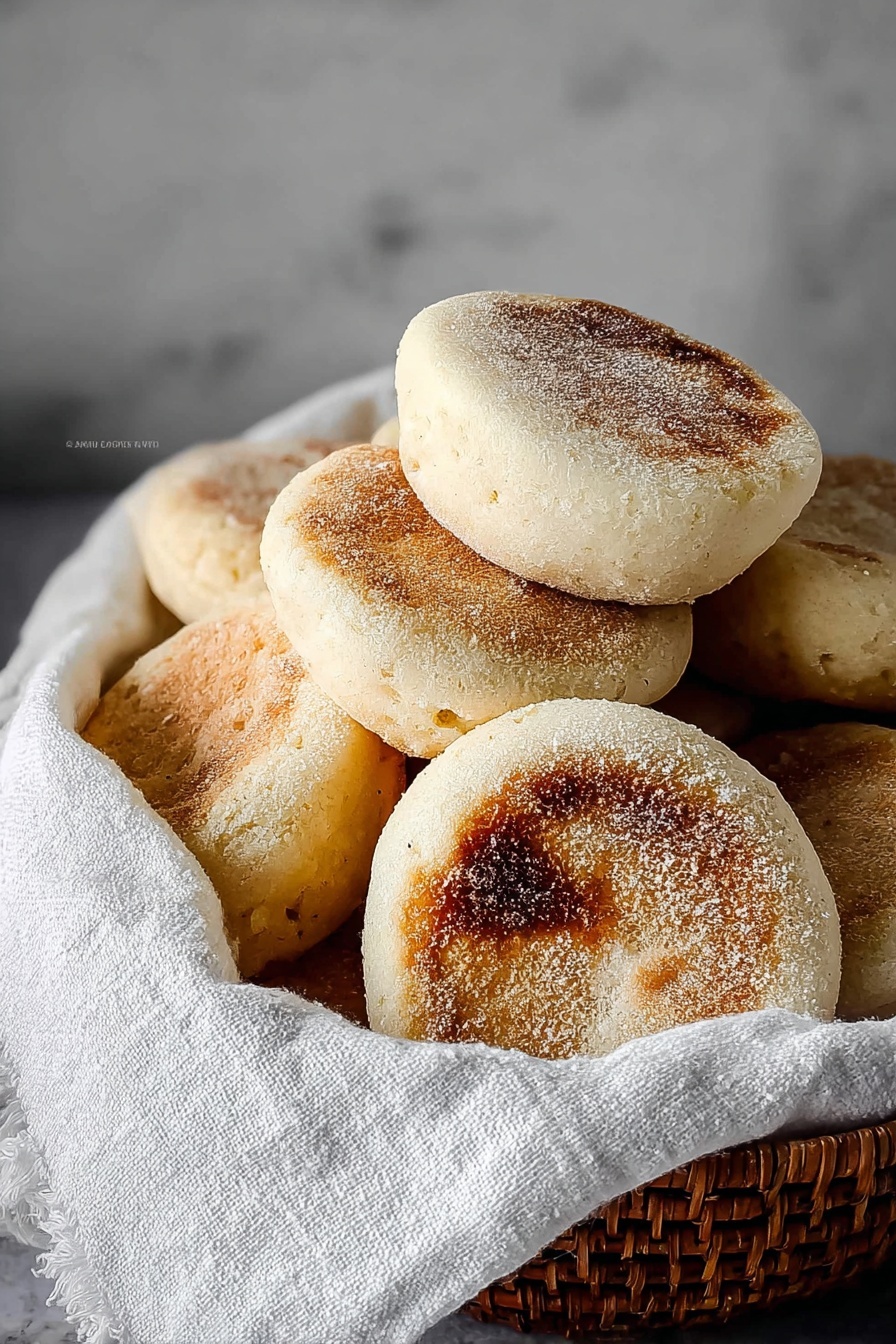
If you adore that chewy texture and the beautiful nooks and crannies that make English muffins so irresistible, then you’re in for a treat with this Homemade Sourdough English Muffins Recipe. I absolutely love how these turn out—light, tangy, and with a perfect crust that you just can’t get from store-bought muffins. Trust me, once you try making these at home, you’ll wonder why you ever settled for anything less!
Why You’ll Love This Recipe
- Natural Flavor Boost: Using a sourdough starter adds a subtle tang and depth you just don’t get with commercial yeast.
- Hands-Off Fermentation: Letting the dough ferment overnight means you wake up to perfectly risen muffin dough, ready to shape and cook.
- Versatile Cooking: You can make these on any flat heat source—your stovetop griddle, frying pan, or electric griddle works like a charm.
- Freezable and Convenient: Make a batch ahead and freeze leftovers to enjoy warm, fresh muffins any time you want.

Ingredients You’ll Need
I love how simply these ingredients come together for maximum flavor and texture. Using an active sourdough starter really makes the difference, and the honey adds just a hint of sweetness to balance the tang. Keep your flour unbleached for the best chew and crumb!

- Active sourdough starter (100% hydration): Make sure your starter is bubbly and active for the best rise and flavor.
- Honey: Adds subtle sweetness and helps the muffins brown beautifully.
- Milk: I prefer whole milk for richness, but you can use any milk you have.
- All-purpose flour (unbleached): Provides the perfect structure without being too heavy.
- Baking soda: Gives a little extra lift to balance the sourdough’s slow fermentation.
- Salt: Enhances flavor and tightens gluten for better texture.
- Cornmeal (or semolina/farina): Dusts the cooking surface to create that signature crunch and prevent sticking.
Variations
I like to keep the classic version close to the original, but you’ll find it’s easy to make this Homemade Sourdough English Muffins Recipe your own with a few tweaks. Feel free to experiment and find what suits your taste and lifestyle.
- Use sourdough discard: I discovered you can skip the baking soda and add instant yeast instead, which means no overnight wait—perfect for a faster turnaround.
- Gluten-free adjustments: Though I haven’t tried it myself, substituting gluten-free flour blends might work — just keep an eye on hydration and texture.
- Flavor add-ins: Add herbs, garlic powder, or a sprinkle of cheese into the dough for a savory twist when you want something different.
- Size variations: Make bigger muffins for sandwiches or smaller ones as cute breakfast bites; just remember the cooking time will adjust.
How to Make Homemade Sourdough English Muffins Recipe
Step 1: Mix and Let the Dough Rise Overnight
Start by combining your active sourdough starter, honey, milk, and flour in a medium bowl. This is where the magic begins. Cover it and set it somewhere at room temperature overnight—about 8 to 10 hours depending on how lively your starter is. I’ve found this long, slow fermentation is the secret to that wonderful sourdough tang and fluffy texture.
Step 2: Add Baking Soda, Salt, and More Flour
The next morning, sprinkle in baking soda and salt, then add about 1 cup of flour to start. Knead the dough either by hand (expect about 10 minutes) or with a stand mixer (roughly 5 minutes) until it’s smooth and elastic. If the dough feels sticky, gradually sprinkle in a little more flour. Rest the dough for 10 to 15 minutes before moving on.
Step 3: Shape and Let Muffins Rise
Roll your dough out to about half an inch thick. Use a 3- to 4-inch round cutter (I often use a hefty glass) to form circles. Place them on a baking sheet lightly greased and generously dusted with cornmeal—that’s key to that iconic crust. Don’t worry about scraps; you can re-roll them for more muffins. Cover with lightly sprayed plastic wrap and let rise for about an hour until puffed.
Step 4: Cook Your Muffins on a Griddle
Heat your griddle or heavy skillet to 325°F (or medium-low heat). Generously sprinkle it with cornmeal and, if needed, spray lightly with vegetable oil to prevent sticking. Cook the muffins 5 to 6 minutes per side, covering the pan if you like, to ensure even heat. You’ll know they’re done when the centers hit about 190°F and you get that beautiful golden color. I flipped mine a few times to check the bottom and avoid burning.
Pro Tips for Making Homemade Sourdough English Muffins Recipe
- Use Forks to Split: I always split my muffins with a fork to preserve the nooks and crannies the way they’re meant to be—never with a knife!
- Temperature Checks: Investing in an instant-read thermometer saved me countless misses; aim for 190°F in the center.
- Generous Cornmeal Dusting: Don’t skimp here—cornmeal creates that perfect crunchy base and stops the muffins from sticking to your pan.
- Patience with Rising: I’ve learned rushing the rise leads to dense muffins; give them a full hour after shaping for best results.
How to Serve Homemade Sourdough English Muffins Recipe

Garnishes
I’m a simple gal—I love to toast these until the edges are crispy and slather on butter and a drizzle of honey or jam. For savory mornings, my go-to is cream cheese with smoked salmon and dill. The slightly sour tang in the muffins pairs beautifully with both sweet and savory toppings.
Side Dishes
These muffins are the perfect companion for scrambled eggs, crispy bacon, and a fresh fruit salad. When feeding a crowd, I like surrounding them with breakfast potatoes or baked beans for that cozy weekend brunch vibe.
Creative Ways to Present
For special occasions, try stacking these English muffins as mini breakfast sandwiches layered with avocado, tomato, and poached eggs. You can even brush the cooked muffins lightly with garlic butter and sprinkle herbs for an elegant appetizer twist—my guests are always surprised.
Make Ahead and Storage
Storing Leftovers
I store leftover muffins in an airtight container on the counter for a day or two, but honestly, they usually get eaten too fast. For longer storage, I recommend freezing.
Freezing
These freeze incredibly well! Once cooled completely, I pop them in a sealed freezer bag. When I’m ready, I’ll pull out as many as I need and toast them directly from frozen—no defrosting needed.
Reheating
My favorite way to reheat is by splitting and toasting them on a dry skillet or toaster, which revives that crispy crust while keeping the inside soft. Avoid microwaving if you can—it tends to make them rubbery.
FAQs
-
Can I make this recipe using sourdough discard instead of active starter?
Yes! If you want to use sourdough discard, skip the baking soda and add 2 to 3 teaspoons of instant yeast. This variation lets you make the dough all in one day, with a shorter rising time. Just mix, let rise, shape, then give the shaped muffins a final rise before cooking.
-
What’s the best way to keep English muffins from sticking to the pan?
Generously dust your griddle or pan with fine cornmeal before cooking, and if it’s not non-stick, lightly spray with vegetable oil. This combo creates a protective barrier that prevents sticking while adding that lovely crunch.
-
How do I know when my English muffins are cooked through?
The center should reach about 190°F on an instant-read thermometer. You’ll also notice a deep golden exterior, and when you tap them, they sound hollow. Splitting with a fork will reveal the perfect crumb with the trademark nooks and crannies.
-
Can I make these muffins larger or smaller?
Absolutely! Just adjust your cutter size accordingly—larger muffins will need slightly longer cooking times. I find small to medium muffins cook evenly and are perfect for sandwiches.
Final Thoughts
This Homemade Sourdough English Muffins Recipe has become a staple in my kitchen because it balances tangy flavor, chewy texture, and that nostalgic crunch like nothing else. It’s one of those recipes that feels fancy but is really quite simple once you get the hang of it. I promise, once you experience making and sharing these, you’ll have a hard time going back to store-bought muffins. Give it a go—you’ll be so glad you did!
Print
Homemade Sourdough English Muffins Recipe
- Prep Time: 8 hours
- Cook Time: 12 minutes
- Total Time: 8 hours 12 minutes
- Yield: 18 small or 9 large English muffins
- Category: Breakfast, Bread
- Method: Stovetop
- Cuisine: American
- Diet: Vegetarian
Description
This homemade English muffin recipe transforms a sourdough starter-based dough into delightfully soft, airy muffins with the perfect nooks and crannies. Fermented overnight for flavor, then cooked gently on a griddle, these muffins are ideal for toasting and pairing with butter, jam, or eggs. The recipe includes detailed steps and tips for making light, tender English muffins using simple ingredients and a natural leavening process.
Ingredients
The Night Before (8 hours before)
- 1 cup (180 g) active sourdough starter 100% hydration
- 2 tablespoons (42 g) honey
- 2 cups (488 g) milk
- 4 cups (500 g) all-purpose flour, unbleached
Next Morning
- 1 teaspoon (4 g) baking soda
- 2 teaspoons (12 g) salt
- 1 cup (125 g) all-purpose flour, unbleached (up to 2 cups as needed)
To Cook the English Muffins
- Cornmeal for dusting griddle or semolina or farina
Instructions
- Mix Ingredients the Night Before: In a medium-sized bowl, combine sourdough starter, milk, honey, and 4 cups of flour. Cover and let rest at room temperature for 8 to 10 hours until fermented and bubbly.
- Add Morning Ingredients and Knead: After fermentation, sprinkle baking soda and salt over the dough, then add 1 cup of flour. Knead the dough until smooth, about 5 minutes with a stand mixer or 10 minutes by hand. Add extra flour if the dough feels too sticky.
- Rest and Roll Out Dough: Let the dough rest for 10 to 15 minutes. Roll it out to about 1/2 inch thickness on a lightly floured surface.
- Cut Muffin Circles: Use a 3 to 4-inch circle cutter or round glass to cut circles from the dough. Place them on a lightly greased baking sheet dusted with cornmeal or semolina. Re-roll scraps to make more muffins, totaling about 18 small or 9 large muffins.
- Allow Muffins to Rise: Cover the muffins lightly with oiled plastic wrap and let them rise for about 1 hour until puffy.
- Preheat Griddle and Cook Muffins: Heat a griddle or non-stick pan to 325°F (medium-low heat). Dust the cooking surface generously with cornmeal or semolina. Cook muffins a few at a time for 5 to 6 minutes per side, covering the pan if possible to help them cook through.
- Check Doneness: The muffins are done when golden brown on both sides and the internal temperature reaches 190°F. Remove and cool before splitting with a fork and serving.
Notes
- Split English muffins with a fork, not a knife, to preserve their characteristic nooks and crannies.
- Use an instant-read thermometer to ensure the interior reaches 190°F for perfect doneness.
- You can cook muffins on an electric griddle, stovetop griddle, or frying pan with a wide, flat surface.
- Generously sprinkle the cooking surface with fine cornmeal, semolina, or farina to prevent sticking.
- If the cooking surface isn’t non-stick, spray with vegetable oil before adding cornmeal.
- Check bottoms after 2 to 3 minutes with a spatula to avoid burning; adjust heat as necessary.
- Leftover muffins freeze well for up to one month when sealed in plastic bags or containers.
- To use sourdough discard instead of active starter, omit baking soda and add 2 to 3 teaspoons instant yeast; mix and rise dough in one day.
Nutrition
- Serving Size: 1 small English muffin (approx. 60g)
- Calories: 160
- Sugar: 4 g
- Sodium: 300 mg
- Fat: 1.5 g
- Saturated Fat: 0.3 g
- Unsaturated Fat: 1.2 g
- Trans Fat: 0 g
- Carbohydrates: 32 g
- Fiber: 2 g
- Protein: 6 g
- Cholesterol: 5 mg