
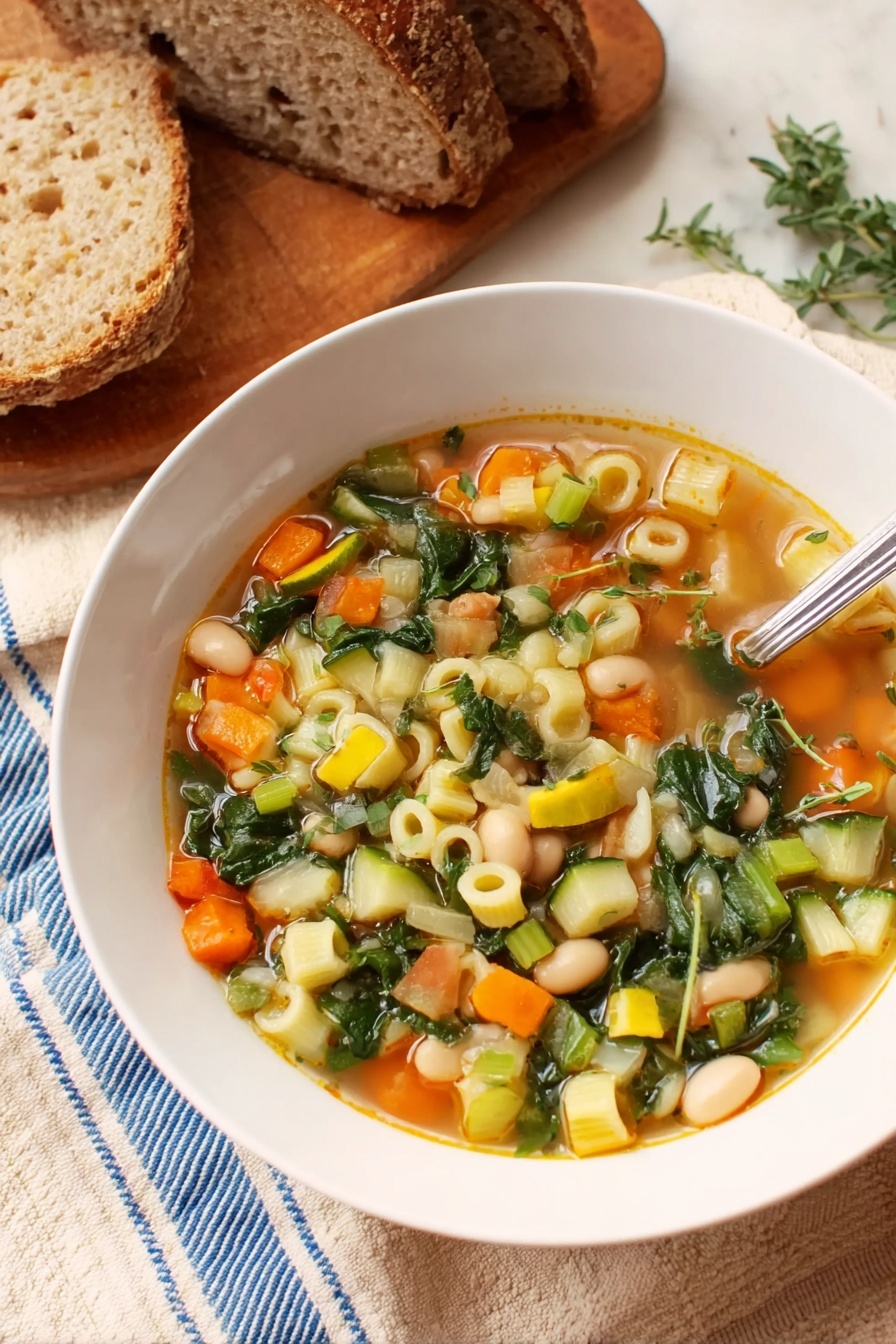
If you’re craving a soup that’s both comforting and bursting with fresh flavors, this Hearty Minestrone Soup with Fresh Vegetables Recipe is going to be your new best friend in the kitchen. I absolutely love how this soup brings together tender beans, vibrant veggies, and that cozy Italian vibe all in one pot. Keep reading, because I’ll walk you through everything you need to know to get perfect results every time—and trust me, your whole family will beg for seconds.
Why You’ll Love This Recipe
- Rich, Authentic Flavor: The slow-simmered beans and fresh herbs infuse the broth with deep, comforting taste.
- Flexible Ingredients: You can easily swap veggies or use canned beans without losing that hearty goodness.
- Perfect for Any Season: Using fresh vegetables keeps it light and bright in warmer months yet satisfying in cooler weather.
- Family Favorite: This is the kind of meal that brings everyone around the table, warm bowls in hand.

Ingredients You’ll Need
The ingredients for this Hearty Minestrone Soup with Fresh Vegetables Recipe work together beautifully to create layers of flavor—from the beans soaking overnight to the mix of fresh herbs and seasonal vegetables. When shopping, choose ripe tomatoes and fresh herbs to really bring the soup alive.
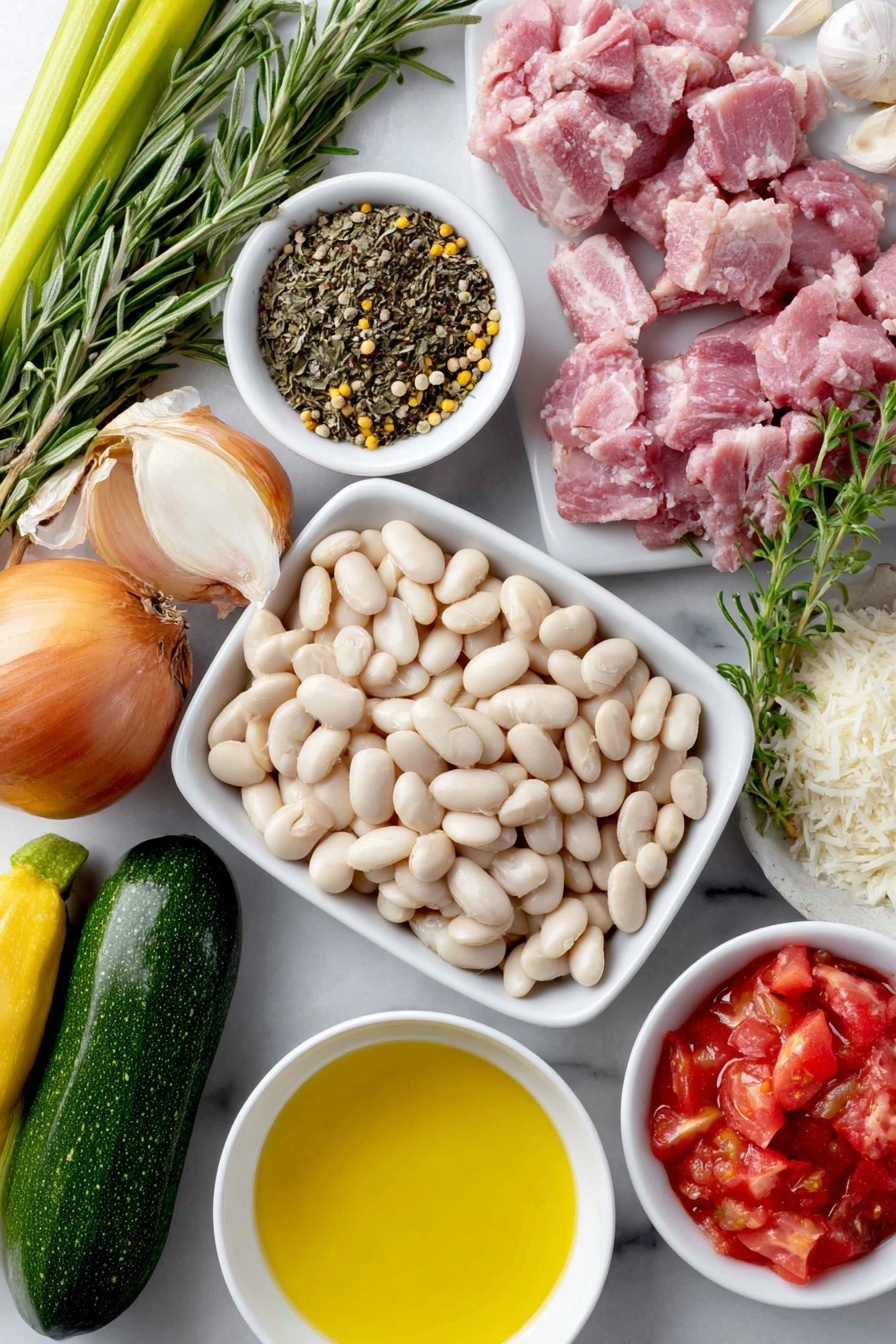
- Dried Beans: Cannellini, borlotti, or kidney beans soak up flavors and add hearty protein and texture.
- Onion, Carrots & Celery: The classic soffritto trio builds depth, so make sure your veggies are fresh and firm.
- Garlic & Fresh Rosemary: Essential aromatics that brighten the soup’s character.
- Salt Pork or Pancetta (Optional): Adds savory richness but you can leave it out for a veggie-friendly version.
- Ripe Roma Tomatoes: Peeling and seeding them really enhances the soup’s texture; canned tomatoes work too when fresh isn’t available.
- Parmesan Rind (Optional): Adds an umami boost, but don’t worry if you don’t have one on hand.
- Small Dried Pasta: Ditalini, macaroni, or orecchiette are perfect for little bites that soak up the broth.
- Zucchini & Summer Squash: Fresh, seasonal veggies that hold onto a nice bite without turning mushy.
- Green Beans & Spinach: Add bright, fresh notes and color to your soup.
- Fresh Herbs: Basil, parsley, or rosemary make for a beautiful finish.
Variations
One of the best parts about the Hearty Minestrone Soup with Fresh Vegetables Recipe is how easy it is to tailor it. I love switching things up to fit what’s in my fridge or to make it fit different dietary preferences.
- Vegetarian Version: Skip the pancetta and use vegetable stock to keep it plant-based without losing flavor.
- Gluten-Free Adaptation: Swap regular pasta for gluten-free or use extra beans and veggies in place of pasta to keep it hearty.
- Seasonal Veggies: I’ve swapped green beans for fresh peas or thrown in kale instead of spinach, depending on what’s local and fresh.
- Speedier Version: Using canned beans shortens prep time without sacrificing the soup’s soul.
How to Make Hearty Minestrone Soup with Fresh Vegetables Recipe
Step 1: Soak and Cook Your Beans to Perfection
I always start by soaking my dried beans overnight—this step really pays off in tenderness and flavor. After soaking, I cook them gently with aromatic vegetables and herbs like onion, carrot, celery, garlic, rosemary, and parsley. This slow simmer helps develop that rich broth you’re aiming for. Just keep an eye on the water level and top off as needed so the beans cook thoroughly over about 45 minutes. Tongs are your friend here to remove the veggies and herbs without losing those creamy beans.
Step 2: Build the Flavor Base with Pancetta and Soffritto
Next, heat your pancetta or salt pork with olive oil until it softens and releases its fat—this step adds wonderful depth, but if you’re skipping pork, just heat the oil until it’s shimmering. Then toss in your finely chopped onions, carrots, celery, and rosemary. Cooking them gently for 10 to 15 minutes helps sweeten and soften the veggies without browning them, which is key if you want that classic minestrone flavor.
Step 3: Add Garlic, Tomatoes, and Simmer
Stir in the minced garlic until it just wakes up and becomes fragrant, then add chopped tomatoes. This part is my favorite—cooking off the tomato moisture ’til the mixture starts frying really intensifies the flavor. You’ll know it’s ready when the sizzling shifts from a gentle simmer to a sharper crackle. Then add your reserved bean cooking liquid, the tender beans themselves, and a Parmesan rind if you have one handy. Letting it all simmer together builds the perfect broth base.
Step 4: Toss in Pasta and Fresh Vegetables
Once the broth is flavorful and bubbling, stir in your small dried pasta, zucchini, summer squash, and green beans. Simmer until everything’s just tender—about 10 minutes. Adding the spinach last is crucial; it only needs a few minutes to wilt, giving you bright green pops throughout. Remove the Parmesan rind once done, unless you want to sneak a nibble yourself!
Step 5: Final Touches and Serving
I like to add my chopped fresh herbs right before serving—it adds freshness and brightness that brings the soup alive. Season it to taste with salt and freshly ground black pepper, and you’re ready to dig in. You can serve it immediately for a lighter style or simmer it longer for a hearty, stew-like texture. Sometimes I even reserve half before simmering to keep some brightness, then stir it back in before serving—it’s a trick I learned to balance richness and freshness.
Pro Tips for Making Hearty Minestrone Soup with Fresh Vegetables Recipe
- Overnight Beans: Soaking your beans overnight softens them and reduces cooking time significantly.
- Sauté Gently: Keep the heat moderate when sautéing your vegetables to avoid browning, which can change the soup’s flavor profile.
- Tomato Technique: Cook the tomatoes until moisture evaporates and they start frying for a richer, deeper taste.
- Pasta Timing: Add pasta near the end to prevent it from becoming mushy, especially if you plan on reheating leftovers.
How to Serve Hearty Minestrone Soup with Fresh Vegetables Recipe
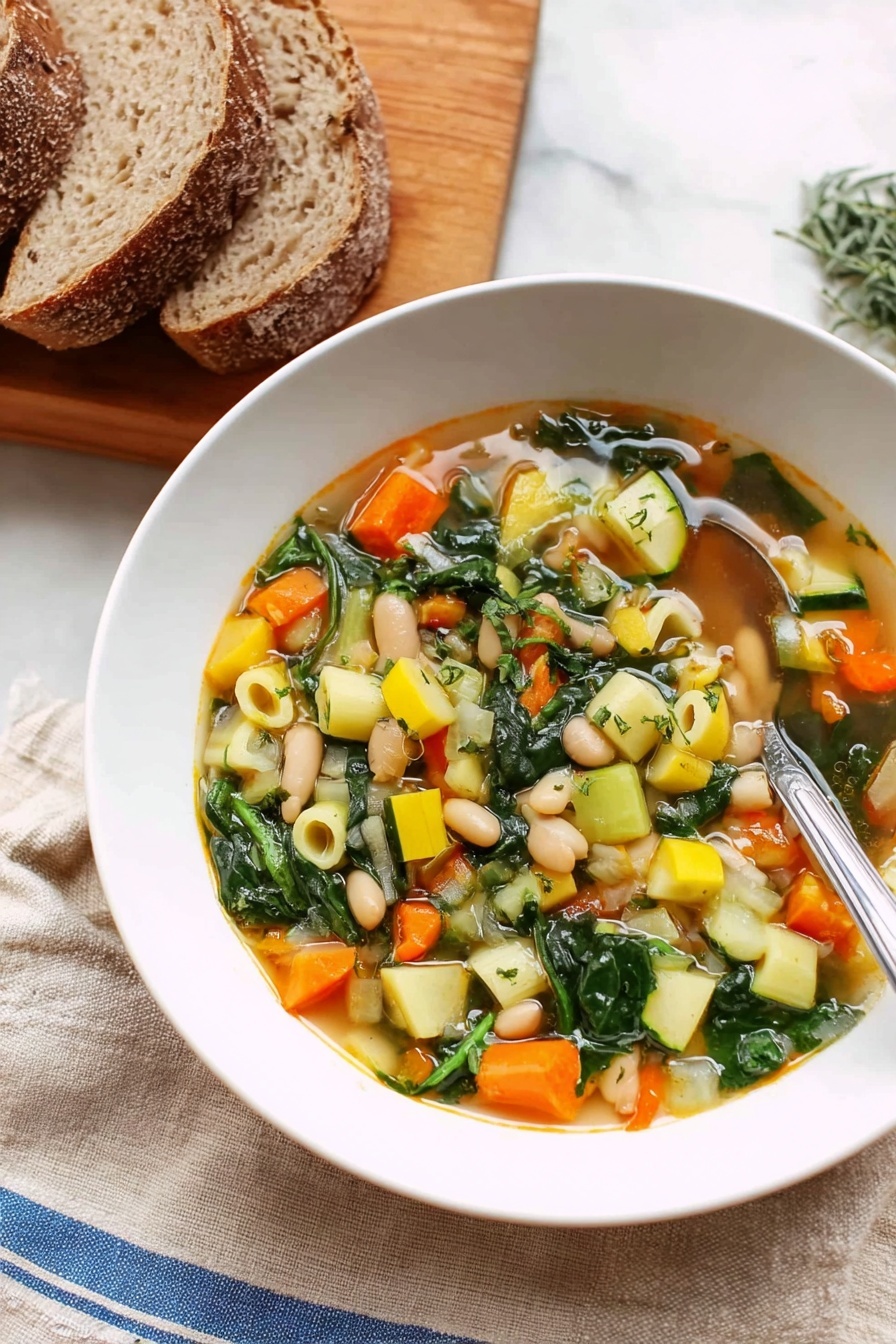
Garnishes
I always sprinkle chopped fresh basil and parsley on top right before serving—it adds that fresh aroma that makes the soup irresistible. A drizzle of good-quality extra-virgin olive oil or a light shave of Parmesan can elevate your bowl even more, making each spoonful feel special.
Side Dishes
This soup shines paired with crusty Italian bread or garlic breadsticks for dunking. Sometimes I like to serve a simple mixed green salad with a lemon vinaigrette to balance the meal and keep it light yet satisfying.
Creative Ways to Present
For special occasions, serving this soup in rustic bread bowls always gets a wow—it’s fun and adds edible charm! Or go for colorful soup mugs and top each serving with a little Parmesan crisp or herb sprig to impress guests.
Make Ahead and Storage
Storing Leftovers
I usually store leftovers in airtight containers in the fridge for up to 4 days. Make sure to keep the pasta separate if you think you won’t finish it soon, as it tends to absorb liquid and get soft.
Freezing
This Hearty Minestrone Soup with Fresh Vegetables Recipe freezes surprisingly well! I freeze the soup without the pasta, then add fresh pasta when reheating. This keeps the texture fresh and prevents mushiness.
Reheating
Reheat gently on the stovetop over medium-low heat, stirring frequently. Add a splash of water or stock if the soup seems thick. If you reserved extra pasta, stir it in at the end just to warm through.
FAQs
-
Can I use canned beans instead of dried beans for this Hearty Minestrone Soup with Fresh Vegetables Recipe?
Absolutely! Using canned beans is a great shortcut. Just drain and rinse two cups of canned beans, then add them to the soup along with about two quarts of vegetable or low-sodium chicken stock. Increase simmering time to about 30 minutes to let flavors meld and vegetables soften.
-
What pasta works best in this Hearty Minestrone Soup with Fresh Vegetables Recipe?
I recommend small shapes like ditalini, elbow macaroni, or orecchiette because they fit nicely on a spoon and soak up the broth well. Avoid large pasta shapes as they can overpower the soup.
-
Can I make this recipe vegan?
Yes! Just skip the salt pork or pancetta and Parmesan rind. Use vegetable stock and add nutritional yeast for a cheesy flavor boost if you like. The beans and veggies provide plenty of hearty texture and taste.
-
How long can I simmer the soup for?
You can simmer this soup anywhere from 10 minutes up to 2 1/2 hours. Longer simmering thickens the soup and deepens flavor, but if you want fresher veggie textures, stick closer to 10-15 minutes after adding pasta and vegetables.
-
Can I prepare parts of this soup in advance?
Definitely. Soaking and cooking your beans ahead of time saves lots of day-of work, and you can prep your vegetables the night before too. Just store everything separately and combine when you’re ready.
Final Thoughts
This Hearty Minestrone Soup with Fresh Vegetables Recipe has been a staple for me when I want something nutritious, cozy, and downright delicious. I love how it’s flexible—perfect for using up whatever veggies are on hand and always rewarding with its rich, homey taste. If you want to feel like you’re wrapped in a warm hug from the inside out, this one’s for you. Give it a try, and I promise you’ll want to keep this recipe in your regular rotation.
Print
Hearty Minestrone Soup with Fresh Vegetables Recipe
- Prep Time: 10 minutes
- Cook Time: 1 hour 40 minutes
- Total Time: 13 hours 50 minutes
- Yield: 6 servings
- Category: Soup
- Method: Stovetop
- Cuisine: Italian
Description
A classic Italian minestrone soup recipe featuring tender beans, seasonal vegetables, and flavorful herbs simmered to perfection, offering a hearty and wholesome meal perfect for any occasion.
Ingredients
For the Beans:
- 8 ounces (225 g) dried cannellini, borlotti, or kidney beans
- Kosher salt
- 1 medium onion, split in half (about 6 ounces; 175 g)
- 1 medium carrot (about 3 ounces; 85 g)
- 2 celery stalks (about 3 ounces; 85 g)
- 2 medium cloves garlic
- 1 large sprig rosemary
- 2 to 3 sprigs parsley
- 1 bay leaf
For the Soup Base:
- 4 ounces (115 g) salt pork or pancetta, cut into 1/4-inch dice (optional)
- 2 tablespoons (30 ml) extra-virgin olive oil, plus more as needed
- 1 medium onion, finely chopped (about 6 ounces; 175 g)
- 1 medium carrot, peeled and finely diced (about 3 ounces; 85 g)
- 2 celery stalks, finely diced (about 3 ounces; 85 g)
- 1 tablespoon (15 ml) minced fresh rosemary leaves
- 2 medium cloves garlic, minced (about 2 teaspoons; 12 g)
- 1 pound (450 g) ripe Roma tomatoes, peeled, seeded, and chopped
- 1 Parmesan rind (optional)
To Finish:
- 1 cup dried small pasta, such as ditali, macaroni, or orecchiette (about 3 1/2 ounces; 100 g)
- 1 medium zucchini, cut into bite-size pieces (about 4 ounces; 115 g)
- 1 medium summer squash, cut into bite-size pieces (about 4 ounces; 115 g)
- 4 ounces green beans, cut into 1/2-inch lengths (about 115 g)
- 4 ounces spinach, roughly chopped (about 4 cups loosely packed leaves; 115 g)
- Chopped fresh herbs, such as basil, parsley, or rosemary, for serving
- Freshly ground black pepper
Instructions
- Prepare the Beans: In a medium bowl, cover the dried beans with cold water by several inches and stir in 1 tablespoon of kosher salt. Let the beans soak for at least 12 hours or up to 24 hours to soften. After soaking, drain and rinse the beans thoroughly.
- Cook the Beans: In a large pot, combine the soaked beans, onion halves, carrot, celery, garlic cloves, rosemary sprig, parsley sprigs, and bay leaf. Cover with water by several inches and add a pinch of salt. Bring to a boil, then reduce heat to a gentle simmer. Cook until the beans are tender, about 45 minutes, adding water if needed. Remove and discard the cooking vegetables and herbs using tongs. Drain the beans, reserving the cooking liquid. Add cold water to the liquid to make a total of 2 quarts (8 cups; 2L).
- Make the Soup Base: Heat the pancetta (if using) with 2 tablespoons of olive oil in a large Dutch oven or stockpot over medium-high heat. Stir occasionally until the pancetta has rendered its fat and softened without browning. If skipping pancetta, heat just the oil until shimmering. Add the finely chopped onion, carrot, celery, and minced rosemary. Season with a generous pinch of salt and cook for 10 to 15 minutes, stirring occasionally until vegetables are softened but not browned. Add minced garlic and cook, stirring, for about 30 seconds until fragrant.
- Add Tomatoes: Add the peeled, seeded, and chopped Roma tomatoes to the pot. Cook the mixture, stirring frequently, until most of the moisture evaporates and the mixture begins to fry, with the sound shifting from simmering to a sharper crackle.
- Combine Beans and Broth: Pour in the reserved bean-cooking liquid along with the cooked beans. Add the Parmesan rind if using. Allow the broth to simmer gently for at least 10 minutes to blend the flavors.
- Cook Pasta and Vegetables: Add the dried pasta, zucchini, summer squash, and green beans to the soup. Simmer until the pasta and vegetables are tender, about 10 minutes. Then add the chopped spinach and cook, stirring occasionally, until the spinach wilts, approximately 5 minutes. Remove and discard the Parmesan rind if used.
- Finish and Serve: Serve the soup immediately, scattered with fresh chopped herbs and freshly ground black pepper. For a heartier texture and deeper flavor, continue simmering the soup for up to 2 1/2 hours, adding pasta later if desired. Alternatively, simmer half the soup and reserve the other half, then stir reserved soup back in before serving to maintain vibrant vegetable textures and flavors.
Notes
- Canned beans can replace dried; use 2 cups canned beans, drained and rinsed, and 2 quarts vegetable or low-sodium chicken stock. Simmer 30 minutes before adding vegetables and pasta.
- Use fresh ripe tomatoes when in season; otherwise substitute one 14-ounce can of whole peeled tomatoes, crushed or chopped.
- Adding a Parmesan rind during simmering enriches flavor but can be omitted for vegetarian or dairy-free versions.
- Adjust salt carefully, especially if using stock or pancetta, to avoid over-salting.
- Simmering longer deepens flavor and softens textures but adding pasta later helps maintain pasta texture.
Nutrition
- Serving Size: 1 serving (approx. 1.5 cups)
- Calories: 280
- Sugar: 6 g
- Sodium: 480 mg
- Fat: 6 g
- Saturated Fat: 1.5 g
- Unsaturated Fat: 4 g
- Trans Fat: 0 g
- Carbohydrates: 45 g
- Fiber: 10 g
- Protein: 13 g
- Cholesterol: 10 mg