If you’re anything like me, the idea of baking sourdough bread can feel a little intimidating. But I promise, this Easiest No Knead Sourdough Bread Recipe will change your mind. It’s simple, hands-off, and truly yields that perfect crusty outside with a beautiful airy crumb inside. When I first tried it, I couldn’t believe I was making bakery-quality bread without all the fuss of kneading or complex techniques. Stick with me, and you’ll find yourself baking loaves you’re proud of, time and time again.
Why You’ll Love This Recipe
- Simplicity: No kneading means less effort but all the flavor and texture of traditional sourdough.
- Time-Saving: The overnight starter step does most of the work while you sleep or go about your day.
- Consistently Great Results: Even if you’re new to sourdough, this method helps you avoid common pitfalls.
- Flexible and Adaptable: You can tweak hydration, flour types, and fermentation times to suit your taste and environment.

Ingredients You’ll Need
The magic in this easiest no knead sourdough bread recipe comes from using a well-fed starter along with simple, straightforward ingredients you probably already have in your pantry. Using unbleached bread flour really helps develop the structure and chew, and the warm water keeps fermentation happy.

- Mature starter: This is your sourdough yeast—make sure it’s bubbly and active for successful rise.
- Unbleached bread flour or all-purpose flour: Bread flour creates a stronger gluten network, but all-purpose works well if that’s what you have.
- Filtered water (90°F): Warm water keeps your starter and dough happy and active without overheating.
- Sea salt: Adds flavor and helps control fermentation.
Variations
I love how versatile the easiest no knead sourdough bread recipe is. Over the years, I’ve played around with flavors, flour types, and even added mix-ins to make it my own. Don’t hesitate to experiment—you’ll find your perfect loaf in no time.
- Whole Wheat Addition: I swapped out 100 grams of bread flour with whole wheat for nuttier flavor and a heartier crumb—my family went crazy for it!
- Seed Mix-Ins: Adding toasted sunflower, flax, or sesame seeds at the folding stage gives a lovely crunch and boosts nutrition.
- Herb Infusion: Fresh rosemary or thyme folded into the dough adds an amazing aroma—it’s perfect for savory occasions.
- Gluten-Free Attempt: While traditional sourdough needs gluten to rise, I tried a gluten-free starter with mixed results—I’d recommend sticking to wheat flours unless you’re experienced with gluten-free baking.
How to Make Easiest No Knead Sourdough Bread Recipe
Step 1: Build Your Starter the Night Before
Start by mixing 25 grams of your mature starter with 75 grams of flour and 75 grams of warm (around 90°F) water in a clean jar. I like using a mason jar because it’s see-through and easy to cover loosely with plastic wrap. Stir until no dry flour remains, then leave it at room temperature overnight. By morning, it should be bubbly and doubled in size—that’s the key to your bread’s lift!
Step 2: Mix the Dough in the Morning
In a large mixing bowl, combine 100 grams of that ripe starter with 300 grams of the warm water. Stir until the starter dissolves completely. Then add in 500 grams of your flour and 10 grams of sea salt. Mix until you get a shaggy, sticky dough. Don’t worry if it looks rough—that’s exactly how it should be for that rustic artisanal texture.
Step 3: First Rise with Oven Light Warmth
Cover your bowl loosely with plastic wrap and place it in the oven with only the light on. This trick creates a cozy spot around 80-85°F—ideal for fermentation. Let it rise for 5-6 hours until puffed and nearly doubled. When you poke it gently, your finger should leave an indentation that slowly fills back in. If your oven gets too warm, crack the door or turn the light off after the first hour.
Step 4: Shape Your Dough Like a Pro
Lightly flour your counter and gently turn the dough out, smooth side down. Starting at the top edge, fold the dough toward the center; repeat with the bottom, then left and right edges. Pinch the seams to seal and repeat the folds once more. Flip it seam-side down, then cup your hands to rotate and pull the dough into a tight ball. The surface should feel taut yet soft—this takes a little practice but is such a rewarding step!
Step 5: Second Rise in a Floured Basket
Dust a bread basket or a large bowl lined with a well-floured kitchen towel. Place your shaped dough seam-side up in the basket and dust lightly with flour to prevent sticking. Cover loosely with plastic wrap, then pop it back into the warm oven light for 2-3 hours. It should almost double and when gently pressed, feel light and airy, holding the dent.
Step 6: Preheat and Score Before Baking
Remove the dough from the oven and preheat your oven to 450°F. No need to preheat your Dutch oven for this recipe—it’ll handle the heat just fine from room temperature. Place parchment paper on the counter and turn the dough out seam side down onto it. Score a decisive, ½-inch deep slash down the middle to help the bread open beautifully during baking.
Step 7: Bake Covered, Then Uncovered
Using the parchment paper, lift the dough into your Dutch oven and cover with the lid. Lower the oven temperature to 425°F. Bake covered for 40 minutes to trap that steam, then remove the lid and bake for an additional 5-10 minutes until the crust is a deep golden brown and sounds hollow when tapped. The smell coming from your oven at this point will have your neighbors knocking!
Step 8: Cool and Enjoy
Carefully remove the loaf with the parchment from the Dutch oven and place it on a cooling rack. This is the hardest part—you really want to slice in immediately but let it cool completely for at least 2 hours. Cooling allows the crust to crisp and the crumb to set perfectly. When you finally cut in, you’ll see that gorgeous crumb structure you’ve been hoping for.
Pro Tips for Making Easiest No Knead Sourdough Bread Recipe
- Check Starter Activity: I always float my starter in water before using—it’s a quick way to gauge if it’s ready to give your bread the best rise.
- Use Oven Light Warmth: My kitchen can be chilly, but the oven light trick creates the perfect temp without overheating—just keep an eye so it doesn’t get too warm.
- Confident Scoring: Hesitating when scoring leads to uneven rising. I learned that a single confident slash really helps the bread open up nicely.
- Don’t Skip Cooling: It’s tempting to slice immediately, but cooling makes all the difference for crust and texture—try waiting the full two hours.
How to Serve Easiest No Knead Sourdough Bread Recipe

Garnishes
I love to brush the crust with a little olive oil right after baking for an added sheen. Sometimes, I sprinkle flaky sea salt or crushed herbs like rosemary on top before the second rise—it adds a nice rustic, gourmet touch that guests always compliment.
Side Dishes
This bread pairs beautifully with creamy soups like roasted tomato or butternut squash. I also adore it with avocado toast toppings or simply alongside a spread of good butter and homemade jam—so simple yet so satisfying.
Creative Ways to Present
For special occasions, I slice the bread thick and serve it in a rustic wooden board surrounded by small bowls of olive oil, balsamic vinegar, and flavored salts for dipping. It instantly turns a simple loaf into a centerpiece everyone gathers around.
Make Ahead and Storage
Storing Leftovers
I store leftover sourdough at room temperature in a paper bag to keep the crust crisp for up to 3 days. Plastic bags tend to soften the crust too quickly. If I know I won’t finish it in time, I slice and freeze it immediately.
Freezing
Freezing sliced sourdough is a total game-changer. I separate slices with parchment paper and store them in an airtight container or ziplock bag. When I want to enjoy a slice, I pull out as many as I need—no waste and every slice tastes fresh!
Reheating
To reheat, I pop slices straight into a toaster or onto a baking sheet in a preheated 350°F oven for 5-7 minutes. This restores the crisp crust and the soft crumb inside beautifully—better than microwaving, which can turn the bread gummy.
FAQs
-
Can I use all-purpose flour instead of bread flour?
Absolutely! While bread flour gives a chewier texture and better rise due to higher protein, all-purpose flour works well and is a perfectly fine substitute for this easiest no knead sourdough bread recipe. Expect a slightly softer crumb, but the flavor remains wonderful.
-
How do I know when my sourdough starter is ready to use?
Look for a bubbly, doubled starter that floats when dropped in water—this float test shows it’s airy and active. Using a starter that’s not quite ready often leads to dense bread, so patience here pays off.
-
What if my kitchen is too cold for rising?
If your environment is chilly, that slower fermentation can be helped by the oven light trick I mention—simply turn on the oven light and place the dough inside to create a warm proofing spot around 80-85°F. Alternatively, you can use a proofing box or warm a spot near a radiator.
-
Do I need a Dutch oven to bake this bread?
While a Dutch oven is ideal because it traps steam to develop a crispy crust, you can bake on a baking stone or heavy pan with a tray of water below to create steam. The texture might differ slightly but still delicious!
-
Can I bake this bread without scoring?
Scoring helps bread expand predictably during baking and creates that lovely artisan look. If you skip scoring, the loaf may burst unevenly or crack unpredictably, so I recommend at least a simple slash down the middle to guide its rise.
Final Thoughts
This easiest no knead sourdough bread recipe has seriously changed my baking game. It’s approachable for newbies but still delivers that deeply satisfying crunch and tangy flavor that makes sourdough so beloved. I enjoy hearing from friends how this recipe helped them fall in love with baking. Trust me, once you give it a try, you’ll want to bake it again and again. Happy baking, and enjoy every crusty, chewy bite!
Print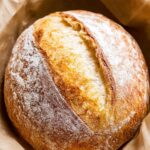
Easiest No Knead Sourdough Bread Recipe
- Prep Time: 15 minutes
- Cook Time: 50 minutes
- Total Time: 10 hours 5 minutes
- Yield: 8 servings
- Category: Bread
- Method: Baking
- Cuisine: American
Description
This Easiest Ever Sourdough Bread recipe is a no-knead, simple artisan bread perfect for beginners and seasoned bakers alike. Made with just a few ingredients including a mature sourdough starter, bread flour, water, and salt, this bread requires minimal hands-on effort but yields a crusty, golden loaf with a soft, airy interior. The process includes an overnight starter build, a long fermentation, gentle folding, and baking in a Dutch oven to achieve a professional bakery-quality crumb and crust at home.
Ingredients
Starter Build (Night Before)
- 25 grams mature starter (about 2 tablespoons)
- 75 grams unbleached bread flour or all-purpose flour (½ cup + 1 teaspoon)
- 75 grams water at 90°F (⅓ cup)
Dough
- 100 grams ripe starter (heaping ⅓ cup)
- 300 grams filtered water at 90°F (1¼ cups + 1 tablespoon)
- 500 grams white bread flour or unbleached all-purpose flour (3½ cups + ½ teaspoon)
- 10 grams sea salt (2⅛ teaspoons)
Instructions
- Build the Starter: The evening before baking, combine 25 grams mature starter with 75 grams flour and 75 grams warm water (90°F) in a clean mason jar. Mix thoroughly until no dry flour remains. Cover loosely with plastic wrap and let rest at room temperature for 8-12 hours. By morning, the starter should double in size and be full of bubbles, indicating it’s ripe and active.
- Mix the Dough: The next morning, in a large bowl, combine 100 grams of ripe starter with 300 grams of warm water (90°F). Stir until the starter is fully dispersed. Add 500 grams bread flour and 10 grams sea salt. Mix until a shaggy, sticky dough forms. Use your hands to gather it into a sticky ball; the texture should be rough and tacky.
- First Rise: Cover the bowl with plastic wrap and place it in the oven with the light on, creating a warm environment around 80-85°F. Let the dough rise for 5-6 hours until it is noticeably puffed and roughly doubled in size. When you gently poke the dough, it should leave an indentation that slowly fills back in.
- Shape the Dough: Lightly dust your counter with flour. Turn the dough out onto the surface with the smooth side down. Fold the dough by pulling the edges into the center from top, bottom, left, and right, pinching to seal. Repeat folds once more. Flip the dough seam-side down and use cupped hands to rotate and tighten it into a smooth, taut ball with a soft pliable surface.
- Second Rise: Dust a bread basket liberally with flour and place the dough seam-side up inside. Lightly dust the dough surface with flour to prevent sticking, then cover with plastic wrap. Return the basket to the oven with the light on for 2-3 hours until doubled in size and airy. The dough will hold an indentation when gently pressed.
- Preheat Oven and Prepare for Baking: Remove the dough from the oven and preheat your oven to 450°F. Note that the Dutch oven does not require preheating for this recipe. Place a sheet of parchment paper on the counter and gently transfer the dough onto it, seam side down. Score the top lengthwise about ½ inch deep with a sharp knife or lame in a decisive, clean cut exposing the pale dough underneath.
- Bake the Bread: Using the parchment paper corners, lift the dough into the Dutch oven. Cover with the lid and reduce the oven temperature to 425°F. Bake covered for 40 minutes. Then remove the lid and bake an additional 5-10 minutes until the crust turns a dark golden brown and sounds hollow when tapped.
- Cool Completely: Remove the bread using the parchment paper and place it on a cooling rack. Allow the bread to cool completely for at least 2 hours until the internal temperature reaches 190-205°F. Cooling fully ensures a crisp crust and fully set crumb. Slice and enjoy your homemade artisan sourdough bread!
Notes
- Active and bubbly starter is crucial; if your starter doesn’t float in water, it’s not ready to use.
- If you don’t have a proofing basket, a large bowl lined with a well-floured kitchen towel works well.
- The dough is naturally sticky during mixing, which is normal and helps achieve the perfect artisan texture.
- In colder kitchens, fermentation may take longer; using the oven light method provides gentle warmth to speed this up.
- Score the dough confidently with a sharp knife; hesitant cuts can cause uneven rising. Beginners can use a simple straight cut.
- While bread flour is ideal for best texture, all-purpose flour can be substituted with good results.
- Store baked bread at room temperature in a paper bag for up to 3 days. For longer storage, slice and freeze in an airtight container for up to 3 months.
Nutrition
- Serving Size: 1 slice (approx. 80g)
- Calories: 210
- Sugar: 1g
- Sodium: 400mg
- Fat: 1g
- Saturated Fat: 0.2g
- Unsaturated Fat: 0.6g
- Trans Fat: 0g
- Carbohydrates: 43g
- Fiber: 2g
- Protein: 7g
- Cholesterol: 0mg