

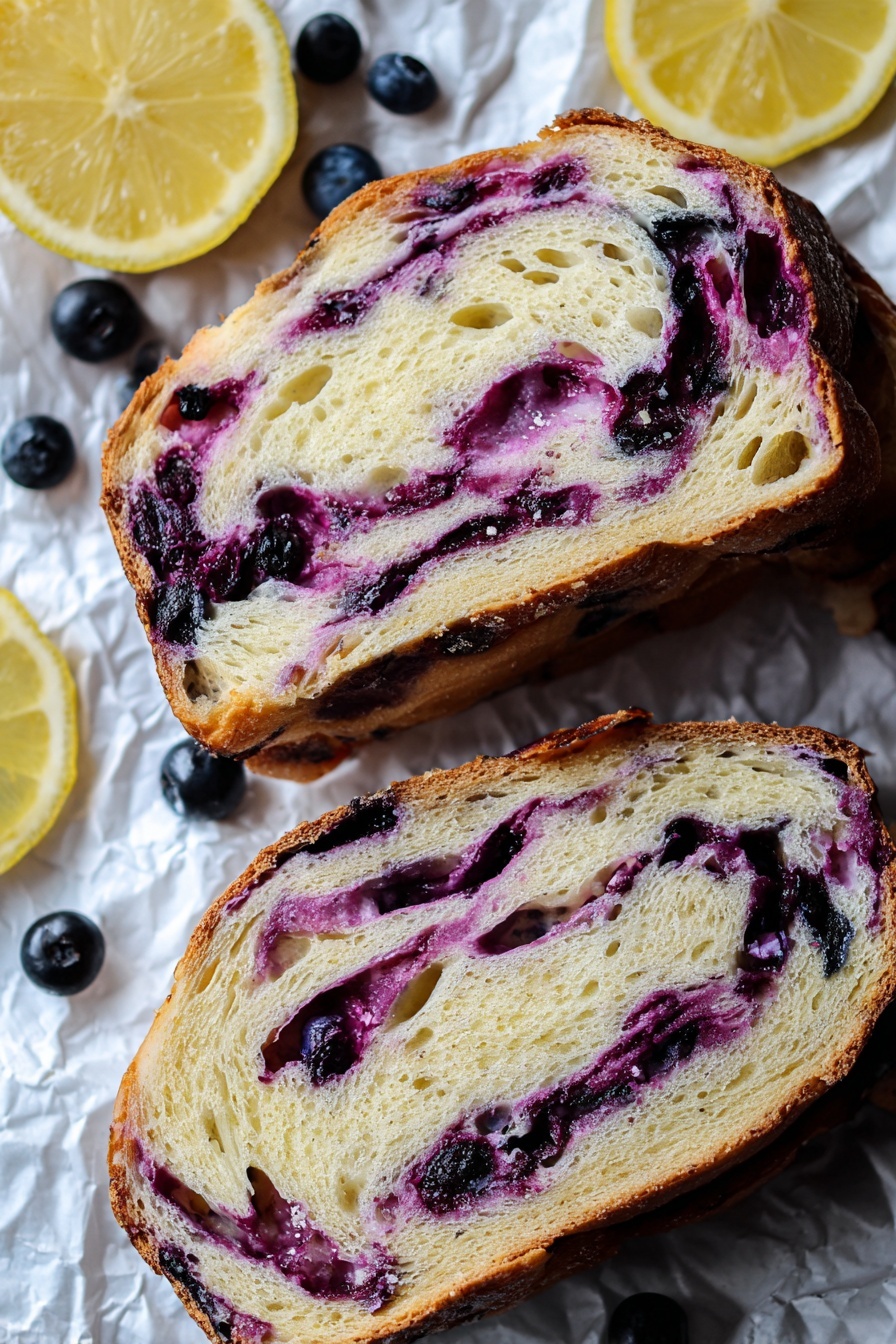
If you’re looking to bake something that’s as beautiful as it is delicious, you’re in for a treat with this Blueberry Lemon Sourdough Bread Recipe. I absolutely love how this bread balances the tangy brightness of lemon zest with sweet bursts of fresh blueberries folded into a hearty sourdough crumb. Trust me, it’s not only a feast for your taste buds but also for your eyes, with a golden crust and those jewel-like berries peeking through. Keep reading and I’ll walk you through every step—so you can nail this at home and wow your family or guests.
Why You’ll Love This Recipe
- Bursting with Fresh Flavors: The fresh blueberries paired with lemon zest bring a refreshing, bright twist to classic sourdough.
- Flexible Timing: You can cold proof the dough anywhere from 8 to 72 hours, which is perfect for busy schedules or weekend bakers.
- Impressive Yet Doable: With detailed steps and some pro tips, this recipe is beginner-friendly but yields a bakery-quality loaf.
- Perfect Pairing: Comes with a delicious whipped blueberry honey butter recipe that elevates every bite.

Ingredients You’ll Need
The beauty of this Blueberry Lemon Sourdough Bread Recipe is how simple ingredients come together for complex flavors. Using fresh blueberries and real lemon zest really makes it stand out—plus, the active sourdough starter gives the bread its unmistakable tang and great crumb.

- Active sourdough starter: Make sure your starter is bubbly and at its peak for the best rise and flavor.
- Water: Filtered water is ideal to avoid chlorine which can harm the yeast in your starter.
- Bread flour: Its higher protein content builds the gluten structure needed for that chewy, airy texture.
- Salt: Essential for flavor and helps control fermentation.
- Fresh blueberries: Fresh is best here, as frozen can add extra moisture that might affect the dough.
- Lemon zest: Adds a fragrant, citrusy brightness without sourness.
- Butter (for whipped blueberry butter): Use room temperature butter to make whipping easier and fluffier.
- Honey: Adds natural sweetness and complements the tart blueberries in the butter beautifully.
- Salt (a pinch for butter): Balances the sweetness and enhances the blueberry notes.
Variations
One of my favorite things about this Blueberry Lemon Sourdough Bread Recipe is how you can make it your own. Whether you want to experiment with different fruits or tweak the flavor balance, options abound!
- Adding nuts: I’ve tossed in chopped walnuts or pecans a few times, and it adds a lovely texture and nuttiness that pairs well with the lemon and blueberry.
- Using frozen blueberries: You can substitute frozen if fresh aren’t available—just be sure to drain any extra moisture to avoid soggy dough.
- Making it gluten-free: While sourdough is traditionally wheat-based, you can experiment with gluten-free flours and an adapted starter for a similar loaf (though texture will differ).
- Switching citrus: If you prefer, try orange zest for a sweeter citrus note or a mix of zest from multiple citrus fruits.
How to Make Blueberry Lemon Sourdough Bread Recipe
Step 1: Starting with Your Starter and Dough
First things first: feed your sourdough starter so it’s lively and ready to do its magic. Depending on your kitchen temperature, it’ll peak anywhere between 4 to 12 hours. When it’s bubbly and has doubled, you’re good to go. Then, mix that 50g active starter with 350g of filtered water until it looks like a milky liquid—this is super important because it hydrates your starter and helps the flour absorb water more evenly when you add it next. I like using a Danish dough whisk here, but your hands work great too.
Step 2: Mixing Flour, Salt, and Resting
Now, add 500g bread flour and 11g salt to that milky mixture and stir or mix with your hands until all the flour is hydrated. Don’t worry if it looks shaggy and uneven at this point. That’s totally normal. Let the dough rest for at least 30 minutes to let the flour fully absorb the water—this rest might seem small, but it makes a huge difference in texture and gluten development.
Step 3: Mastering the Stretch and Fold
This is where the magic begins—and the dough starts to come together. Wet your hands slightly to avoid sticking and gently grab a section of dough, stretching it upwards then folding it back over the main mass. Rotate the bowl about 90 degrees and repeat this all the way around. You’ll notice the dough getting smoother and stronger. Let it rest for 30 minutes, then repeat this stretch-and-fold cycle 3 more times over the next 2-3 hours. This process builds the gluten so your bread will have that perfect chew without any tough spots.
Step 4: Bulk Fermentation and Spotting the Signs
Bulk fermentation time varies, but typically for this recipe, at around 68-70°F, it’ll be 6-9 hours. Instead of just watching the clock, I learned to trust the dough itself—it should grow about 50% in size, look bubbly and light, jiggle when you give it a gentle shake, and feel elastic. A windowpane test (where you stretch a small piece until translucent without tearing) is a great indicator your gluten has developed enough. Patience here pays off big time!
Step 5: Preshape with Care
When the dough’s bulk ferment is done, wet your fingers and gently coax the dough from your bowl—be very careful not to pop those precious bubbles you worked hard for! Tip the bowl so gravity helps the dough slide out onto your counter. Then give it another round of stretch and folds all the way around to create surface tension. Flip it seam side down on the counter and cover with your bowl to rest for 30 minutes. This preshaping step helps create the perfect structure for the final proof.
Step 6: Final Shape and Infusing Blueberries & Lemon
This part can feel a bit tricky the first time, but I promise it gets easier. Flip your dough with the seam side up, then gently stretch it into a large rectangle. The key here is patience—if you stretch too thin, the blueberries will burst through, making a mess. Sprinkle half your blueberries and lemon zest over the dough, then fold the left side in. Repeat layering blueberries and zest, then fold the right side. You’re basically doing a tri-fold, then rolling the dough like a log. Finish by gently tightening the dough into a ball with small pulls towards you, turning it slightly between pulls to keep its shape. Place it seam side down into a floured proofing basket and cover airtight.
Step 7: Cold Proofing for Flavor and Flexibility
Pop your proofing basket in the fridge for anywhere from 8 to 72 hours. This slow fermentation develops deeper flavor and gives you scheduling freedom. Just don’t stray too long—overproofed dough will become overly slack and tough to bake. I’ve found that around 24 hours is a sweet spot for me. When you’re ready to bake, transfer the dough to the freezer 30 minutes before baking to firm it up slightly and make scoring easier.
Step 8: Scoring and Baking Magic
Preheat your oven to 450°F with a Dutch oven inside for at least 30 minutes—this ensures the vessel is steaming hot, creating perfect crust. Gently flip your dough onto a piece of parchment—the floured proofing basket should release it without fuss. Score your dough with a crescent moon or a design you like. Use the parchment paper to lower the dough into the Dutch oven, cover it, and bake for 27 minutes. Then remove the lid and bake 10-15 minutes more until golden brown. This two-stage bake traps steam at first for a beautiful crust, then finishes it off with a crisp bake.
Once out of the oven, always let your bread cool at least an hour. I know it’s tough—freshly baked bread smells irresistible—but this rest lets the crumb set so it won’t be gummy. And listen carefully—you might catch your loaf “singing” as it cools, a sign of a perfect bake!
Step 9: Whipped Blueberry Honey Butter
While waiting for your loaf to cool, whip together 8 tablespoons of room temp butter with 1/2 cup mashed blueberries and 2 tablespoons honey. I use my stand mixer with a whisk attachment to get a fluffy, spreadable texture in just a couple minutes. A pinch of salt balances the sweetness and really makes the fruit pop. This butter is a *must* with your fresh bread slices—it’s my family’s favorite part!
Pro Tips for Making Blueberry Lemon Sourdough Bread Recipe
- Use Room Temperature Ingredients: Make sure your butter is soft and water is at room temp for better dough development and easier whipping.
- Don’t Rush Bulk Fermentation: Watch the dough’s behavior, not just the time—it’s the best way to judge readiness.
- Cold Proof to Enhance Flavor: The long, slow ferment really deepens complexity—it’s worth the wait!
- Score Just Before Baking: Scoring while the dough is cold from the freezer helps get those dramatic, crisp cuts.
How to Serve Blueberry Lemon Sourdough Bread Recipe
Garnishes
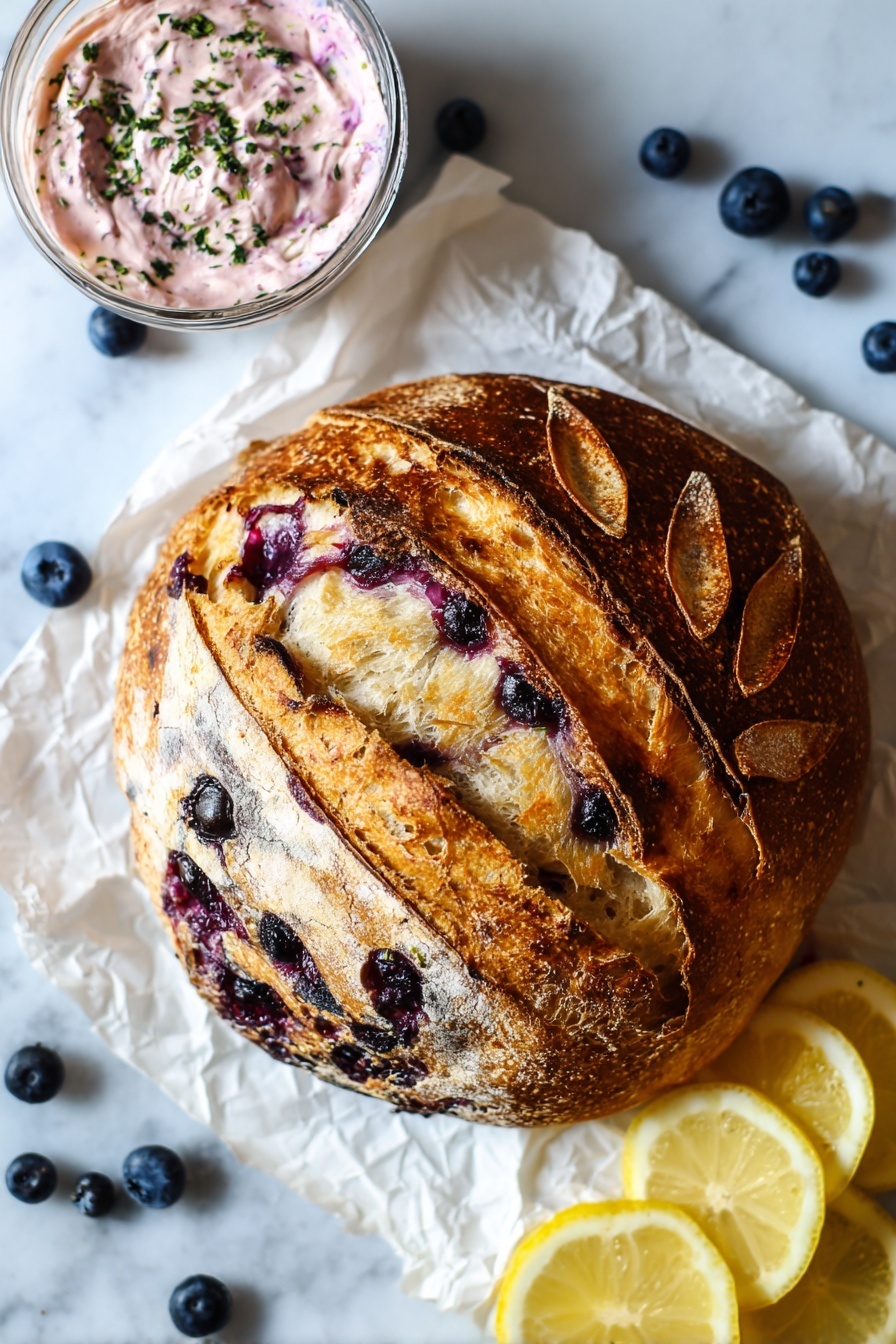
I love topping my fresh slices with a bit of whipped blueberry honey butter—like I mentioned, it’s a delicious, fruity complement. Sometimes I sprinkle a tiny bit of flaky sea salt on top of the butter for a lovely salty-sweet contrast. On special mornings, a few extra fresh blueberries on the side add a pretty garnish and extra fresh flavor.
Side Dishes
This bread pairs beautifully with brunch spreads—think creamy Greek yogurt with honey, soft scrambled eggs, and a fresh fruit salad. I’ve also served it alongside cheese boards; it holds up well with brie, goat cheese, or aged cheddar for a sweet-savory balance.
Creative Ways to Present
For gatherings, I slice the bread thick and arrange it on a wooden board with small bowls of the whipped blueberry butter, fresh lemon slices, and a handful of fresh blueberries scattered around for color. It makes for a stunning display that always sparks conversation. I even tried a mini loaf version for a gift once, wrapping it up with fresh herbs and a handwritten note—so cute and personal!
Make Ahead and Storage
Storing Leftovers
I usually keep leftover sourdough in a paper bag at room temperature to maintain the crust’s crunch while preventing the crumb from drying out. Avoid plastic if you like a crusty exterior, but if you prefer softer bread, wrap it loosely so it doesn’t dry out.
Freezing
If you want to save some for later, slice your cooled loaf and store the slices in a freezer bag with parchment paper layers to prevent sticking. Simply pull out slices as needed, and they thaw quickly at room temp or in the toaster.
Reheating
I like reheating the bread slices in a toaster or oven at 325°F wrapped in foil for about 5-8 minutes—this refreshes the crumb and adds back some warmth without drying it out. For that extra crisp crust, unwrap and toast lightly after.
FAQs
-
Can I use frozen blueberries for this Blueberry Lemon Sourdough Bread Recipe?
Yes, you can! Just make sure to thaw and drain them well to remove excess moisture. Too much water from frozen berries might make your dough too sticky and affect the texture. I recommend gently patting them dry with paper towels before adding to the dough.
-
How do I know when my sourdough starter is active enough for this recipe?
An active sourdough starter should be bubbly, have doubled in size within its usual peak time, and pass the float test (a small spoonful floats in water). Using it at peak activity ensures your bread will rise well and have that perfect tangy flavor.
-
Why do I need to cold proof the dough?
Cold proofing slows down fermentation, giving the bread’s flavor more time to develop and resulting in a deeper, more nuanced taste. It also adds flexibility to your baking schedule, so you’re not rushed to bake immediately after shaping the dough.
-
Can I bake this bread without a Dutch oven?
While a Dutch oven helps trap steam for a great crust, you can bake on a preheated baking stone or sheet and add a pan of water to the oven to create steam. However, results might vary slightly—your crust might be less crisp and rise a bit differently.
Final Thoughts
This Blueberry Lemon Sourdough Bread Recipe has become one of my absolute favorites to bake. I love how it feels like a little celebration every time the oven timer dings and I pull out a loaf glistening with blueberries and fresh lemon aroma. It’s perfect for breakfast, brunch, or a sweet afternoon snack with tea. I’m excited for you to give it a shot—you’ll enjoy the process and the delicious results almost as much as I do!
Print
Blueberry Lemon Sourdough Bread Recipe
- Prep Time: 30 minutes
- Cook Time: 45 minutes
- Total Time: 13 hours 15 minutes
- Yield: 1 loaf
- Category: Bread
- Method: Baking
- Cuisine: American
- Diet: Vegetarian
Description
This Lemon Blueberry Sourdough Bread recipe combines the tangy depth of a classic sourdough loaf with the fresh sweetness of blueberries and zesty lemon. Featuring a detailed fermentation and folding process for a perfect crumb, this bread is baked in a Dutch oven for a crisp crust and soft interior. Paired with a luscious whipped blueberry honey butter, it’s an irresistible treat ideal for breakfast, brunch, or a flavorful snack.
Ingredients
Lemon Blueberry Sourdough Bread
- 50g active sourdough starter
- 350g filtered water
- 500g bread flour
- 11g salt
- 150g fresh blueberries
- Zest of 1 lemon
Whipped Blueberry Honey Butter
- 8 Tablespoons (113g) butter, room temperature
- 1/2 cup (75g) fresh blueberries, mashed
- 2 Tablespoons (45g) honey
- A pinch of salt
Instructions
- Feed Your Sourdough Starter: Ensure your sourdough starter is active and bubbly, which can take 4-12 hours depending on your environment to peak before starting the dough.
- Make the Dough: In a large mixing bowl, combine 50g active sourdough starter with 350g filtered water, mixing until milky. Add 500g bread flour and 11g salt; mix thoroughly until all flour is incorporated and dough appears shaggy. Let rest for at least 30 minutes.
- Stretch and Folds: Using wet hands, perform stretch and folds around the dough by stretching sections over the dough and folding them, rotating the bowl until full circle is complete. Allow dough to rest for 30 minutes. Repeat stretch and folds three more times, resting at least 30 minutes between each round.
- Bulk Fermentation: Allow the dough to ferment bulk in a warm environment (68-70°F) for 6-9 hours until it grows by 50%, becomes light, jiggles, has bubbles visible, pulls easily from the bowl, and passes the windowpane test.
- Pre-Shape: Gently release dough from the bowl using wet fingers without deflating it. Use gravity to move dough onto a counter, pre-shape with a round of stretch and folds. Flip dough seam-side down, cover with bowl, and let rest 30 minutes.
- Prepare Proofing Basket: Flour a banneton or a small bowl lined with a tea towel with all-purpose flour to prevent sticking. Set aside 150g fresh blueberries and lemon zest for later use.
- Final Shape: Flip rested dough seam-side up; gently stretch into a rectangle (lamination). Spread half the blueberries and lemon zest over the dough. Fold left side toward the middle, spread half remaining blueberries and zest. Fold right side toward middle in a tri-fold, spread remaining blueberries and zest. Roll dough starting from nearest edge. Shape into a tight ball using clockwise turns and folding motions, being careful of blueberry breakage.
- Cold Proof: Place the shaped dough seam-side down into the floured proofing basket, cover with plastic, and refrigerate for 8-72 hours to slow fermentation and develop flavor.
- Preheat Oven and Dutch Oven: 30 minutes before baking, place dough in freezer to firm for scoring. Preheat oven to 450°F with Dutch oven inside for at least 30 minutes.
- Score: Carefully turn dough out onto parchment paper, floured side up. Score a crescent moon or preferred design to allow expansion during baking.
- Bake: Transfer dough on parchment into the Dutch oven and cover. Bake covered for 27 minutes. Remove lid and bake 10-15 minutes more until golden brown with a crisp crust.
- Cool: Remove bread using parchment onto wire rack, cool for at least 1 hour before slicing to avoid gummy texture and allow crumb to set while enjoying the bread’s auditory ‘singing’.
- Make Whipped Blueberry Honey Butter: Using a stand mixer with whisk attachment, beat 113g room temperature butter, 75g mashed blueberries, 45g honey, and a pinch of salt on high for 2-3 minutes until fluffy and well combined.
- Serve: Slice cooled bread, spread with whipped blueberry honey butter, and enjoy the bright, tangy, and sweet flavors.
Notes
- Active sourdough starter timing varies; adjust fermentation times based on your environment.
- Stretch and folds can be flexible, approximately every 30-60 minutes during bulk fermentation.
- Cold proofing enhances flavor but avoid fermenting too long to prevent overproofing and poor rise.
- Scoring is essential for oven spring and aesthetic design; freezing dough before scoring helps with clean cuts.
- Cool bread fully before slicing to ensure best texture.
- Use fresh blueberries for brightest flavor and best texture in both bread and butter.
- You can substitute banneton with a floured bowl if needed.
Nutrition
- Serving Size: 1 slice (approximately 80g)
- Calories: 210
- Sugar: 4g
- Sodium: 300mg
- Fat: 4.5g
- Saturated Fat: 2.5g
- Unsaturated Fat: 2g
- Trans Fat: 0g
- Carbohydrates: 38g
- Fiber: 2g
- Protein: 6g
- Cholesterol: 15mg